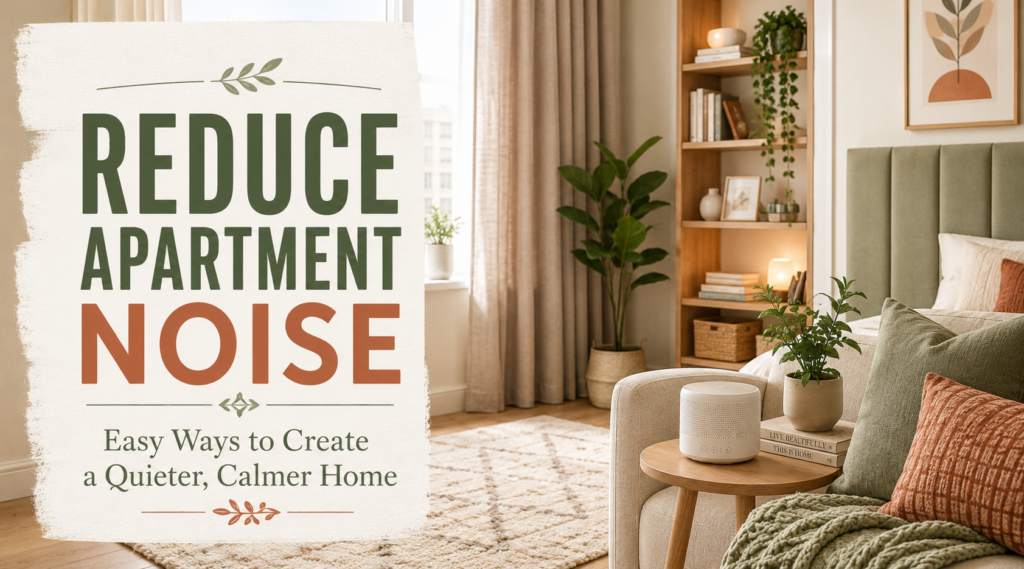
Apartment living has plenty of advantages, but noise can be one of the most frustrating parts.
You may hear footsteps from the apartment above, traffic outside your window, conversations through shared walls, doors closing in the hallway, or even your neighbor’s television late at night.
The good news is that you do not always need expensive soundproofing or major construction to make your home feel quieter.
There are plenty of simple ways to reduce noise in an apartment using curtains, rugs, furniture, acoustic materials, and a few smart changes around the home.
Here are some practical ideas worth trying.
1. Add Thick Curtains to Your Windows
Windows are one of the easiest places for outside noise to enter your apartment.
Heavy curtains can help soften sounds from:
- Traffic
- People outside
- Construction
- Nearby businesses
- Cars and motorcycles.
Look for thick, layered, or sound-reducing curtains that extend beyond the sides of the window.
Floor-to-ceiling curtains can work especially well because they cover a larger surface.
As a bonus, they can also make the room feel warmer and more finished.
2. Use Large Area Rugs
Hard floors allow sound to bounce around a room.
Adding an area rug can help absorb some of that sound while also making your apartment feel cozier.
This is particularly useful in:
- Living rooms
- Bedrooms
- Hallways
- Home offices.
For better sound absorption, place a thick rug pad underneath.
A rug pad can also make the floor feel softer and reduce the sound of footsteps.
3. Place Furniture Against Shared Walls
If you can hear your neighbors through a shared wall, try placing large furniture against it.
Bookshelves, wardrobes, cabinets, and upholstered furniture can create an additional layer between you and the noise.
A tall bookshelf filled with books can work particularly well because the combination of furniture and books helps break up sound.
This is one of the easiest ways to reduce noise in an apartment without making permanent changes.
4. Add Upholstered Furniture
Rooms filled with hard surfaces tend to echo more.
Soft furniture helps absorb sound.
Consider adding:
- Upholstered chairs
- Fabric sofas
- Ottomans
- Cushioned benches
- Throw pillows.
You do not need to overcrowd the room.
Even a few soft surfaces can make the space feel noticeably less echoey.
5. Use Acoustic Wall Panels
Acoustic panels are designed to reduce sound reflections inside a room.
They are especially useful in:
- Home offices
- Bedrooms
- Gaming rooms
- TV rooms
- Music spaces.
Modern acoustic panels do not have to look like studio equipment.
You can now find decorative fabric panels, wooden slat panels, felt designs, and wall art that also helps with sound absorption.
Choose something that matches your decor so it feels intentional.
6. Seal Gaps Around Windows
Even small gaps around windows can allow a surprising amount of noise inside.
Weatherstripping can help seal these openings.
Check around:
- Window frames
- Sliding windows
- Balcony doors
- Window tracks.
Weatherstripping is inexpensive and can also help improve temperature control.
If your windows are older, this small upgrade may make a noticeable difference.
7. Seal the Gap Under Your Door
Hallway noise often enters through the gap underneath the front door.
A door sweep or draft stopper can help reduce the amount of sound passing through that space.
It can also help block:
- Dust
- Cold drafts
- Light
- Odors.
For renters, removable door draft stoppers are especially convenient because they usually require no permanent installation.
8. Add Curtains Around Balcony Doors
Large glass balcony doors are great for natural light, but they can also allow outdoor noise into the apartment.
Thick curtains or layered window treatments can help soften the sound.
Try combining:
- Blinds
- Sheer curtains
- Heavier drapes.
This layered approach also gives you better control over privacy and sunlight.
9. Use Bookshelves as a Sound Buffer
A full bookshelf does more than store books.
It can also help create a barrier against sound coming through a wall.
Position a bookshelf against the wall where noise seems strongest.
Then fill it with:
- Books
- Storage boxes
- Baskets
- Decorative objects.
The uneven surfaces can help reduce the way sound travels through the room.
10. Try a White Noise Machine
Sometimes blocking noise completely is not possible.
In those cases, masking it may be easier.
A white noise machine creates a consistent background sound that can make unpredictable noises less noticeable.
It can be particularly useful at night if you are disturbed by:
- Traffic
- Neighbors
- Doors closing
- Dogs barking
- Building sounds.
Some devices also offer rain, fan, ocean, or nature sounds if you prefer something softer than traditional white noise.
11. Use a Fan for Background Noise
If you do not want to buy a separate sound machine, a fan can provide a similar effect.
The steady sound of a ceiling fan, tower fan, or air purifier can help cover occasional background noises.
This can be especially useful in bedrooms.
It also gives you the added benefit of improved airflow.
12. Add Fabric Wall Hangings
Large blank walls can reflect sound.
Fabric wall hangings, tapestries, quilts, and textile artwork can help soften a room.
They are also renter-friendly because many can be installed using removable hooks.
Choose something that complements your existing decor so it feels like wall art rather than soundproofing.
13. Use Soft Furnishings Around the Room
Small decor choices can also help reduce echoes.
Consider adding:
- Curtains
- Cushions
- Throws
- Fabric lampshades
- Upholstered headboards
- Floor cushions.
The goal is to balance hard surfaces with softer materials.
This can make the room feel both quieter and more comfortable.
14. Add an Upholstered Headboard
If noise travels through the bedroom wall, an upholstered headboard may help soften some of it.
Position the bed against the shared wall and choose a padded headboard with fabric upholstery.
For an even softer look, add pillows, curtains, or wall panels nearby.
This works particularly well in bedrooms where outside noise is most noticeable at night.
15. Move Your Bed Away From the Noisy Wall
Sometimes the simplest solution is changing the room layout.
If your bed is directly against a wall shared with a noisy neighbor, move it to another side of the room if possible.
Even a little extra distance can make sound feel less intrusive.
Place a bookshelf, dresser, or wardrobe against the shared wall instead.
16. Use Felt Pads Under Furniture
Dragging chairs, stools, and tables can create a surprising amount of apartment noise.
Felt furniture pads are inexpensive and easy to install.
Place them underneath:
- Dining chairs
- Coffee tables
- Stools
- Side tables
- Desks.
They help furniture move more quietly while also protecting your flooring.
This is particularly useful if you want to reduce the noise you create for neighbors below.
17. Add a Rug Runner in the Hallway
Hallways often amplify footsteps.
A long rug runner can help reduce the sound while adding warmth to what is often an overlooked part of the apartment.
Use a non-slip rug pad underneath to prevent the runner from moving.
This is a simple way to make your home feel quieter without changing anything permanently.
18. Consider Window Inserts
If traffic or street noise is a major problem, window inserts can be worth considering.
These panels are fitted inside the existing window and create an additional barrier against sound.
They can be particularly useful for apartments near:
- Busy roads
- Airports
- Train tracks
- Nightlife areas.
Before installing anything permanent, renters should check their lease or speak with the property owner.
19. Use Door Curtains
If noise travels through an interior doorway, a heavy curtain can create another soft barrier.
This can work well between:
- Bedroom and hallway
- Home office and living room
- Entryway and main room.
It is not a complete soundproofing solution, but it may help reduce echoes and make the room feel more separated.
20. Try Removable Acoustic Tiles
Renters may not want to install permanent wall treatments.
Removable acoustic tiles can be a useful alternative.
Depending on the product, they may attach using removable strips or temporary mounting systems.
Use them behind:
- A desk
- Television
- Bed
- Gaming setup.
They can help reduce echo while also adding texture to the room.
Reduce the Noise You Create Too
Sound travels both ways.
If you live above someone else, consider how much noise your own apartment creates.
Simple changes such as adding rugs, using felt pads, avoiding loud speakers directly against shared walls, and wearing soft slippers indoors can help.
This can make apartment living more comfortable for everyone.
When Should You Consider Professional Soundproofing?
If noise is severe and simple solutions do not help, you may want to explore professional options.
These could include:
- Acoustic insulation
- Additional drywall
- Soundproof windows
- Acoustic doors
- Wall treatments.
These solutions are usually more expensive and may require permission from your landlord or building management.
If you rent, always check before making permanent changes.
Final Thoughts
There are plenty of practical ways to reduce noise in an apartment without turning your home into a recording studio.
Start with soft surfaces.
Add rugs to hard floors, hang thicker curtains, use upholstered furniture, and place bookshelves against shared walls.
Then seal obvious gaps around doors and windows.
For noise you cannot completely block, white noise machines, fans, or sound-absorbing materials can make it much less noticeable.
A quieter apartment does not have to mean a major renovation.
Often, a few thoughtful changes can make your home feel calmer, more comfortable, and much easier to relax in.