Kitchen knives are more than just cutting tools; they make cooking easier, faster, and more enjoyable. Using the right knife helps you cut with precision, work safely, and get better results with less effort. Whether you’re cooking daily meals or trying new recipes, understanding the types of Kitchen Knives can completely change how you work in the kitchen.
This guide breaks down each kitchen knife in an easy way so you can quickly understand what each one does and choose the knives that best suit your cooking style.
Why Knowing the Types of Kitchen Knives is Important?
Every knife is made for a specific task. Using the correct knife reduces strain on your hands, prevents uneven cuts, protects ingredients, and extends the blade’s life. When you know the types of Kitchen Knives, you stop forcing one knife to do every job and start cooking with confidence and control.
Essential Types of Kitchen Knives
Here are the essential types of kitchen knives that every kitchen should have to handle everyday cooking with ease:
1. Chef’s Knife
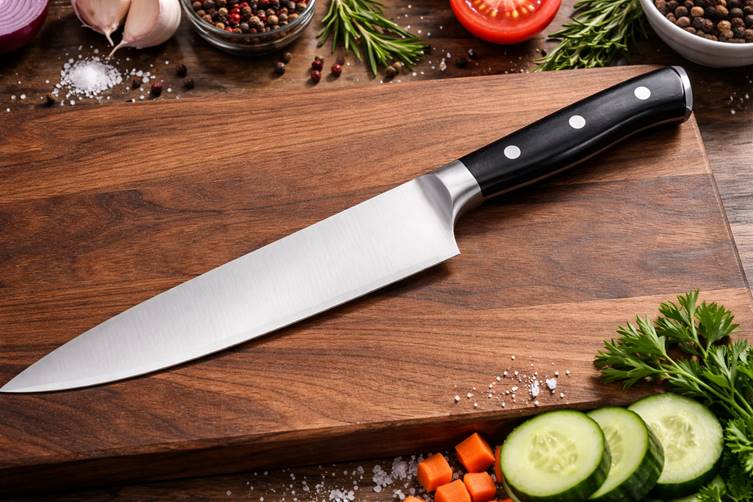
Blade Length: 6–12 inches
Blade Shape: Broad with a curved edge
Best For: All-purpose cutting, chopping, and slicing
The chef’s knife is the most versatile and widely used typeof Kitchen Knife, often considered the backbone of any kitchen. Its gently curved blade supports a smooth rocking motion, reducing hand fatigue and increasing speed during repetitive tasks. The wide blade also provides excellent knuckle clearance, enabling safe, comfortable chopping on a cutting board.
Key Uses:
- Chopping vegetables like onions, carrots, potatoes, and bell peppers
- Slicing raw and cooked meat, poultry, and fish with precision
- Dicing vegetables evenly for soups, curries, and stir-fries
- Mincing garlic, herbs, and aromatics efficiently
- Crushing garlic cloves or spices using the flat side of the blade
- Scooping and transferring chopped ingredients from the board to the pan.
Why It’s Essential:
This knife replaces multiple specialized tools, making it one of the most valuable types of Kitchen Knives for everyday cooking. Its balanced weight offers excellent control, while the sturdy blade handles both delicate and tough ingredients with ease. The chef’s knife works for almost any cutting task, whether you’re making a quick weekday meal or a fancy recipe, making it perfect for beginners and experienced cooks.
2. Paring Knife
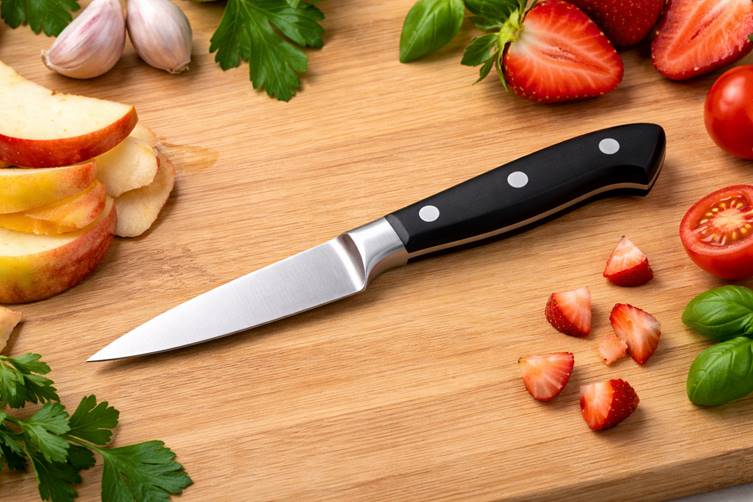
Blade Length: 3–4 inches
Blade Shape: Short, narrow, and pointed
Best For: Small, precise cutting tasks
The paring knife is compact, lightweight, and highly maneuverable, making it a staple among all types of Kitchen Knives. Its small blade allows you to perform intricate work that requires accuracy and control rather than brute force. Because it is easy to handle, the paring knife is especially useful for tasks where a chef’s knife would feel cumbersome.
Key Uses:
- Easily peel fruits and vegetables like apples, potatoes, and cucumbers
- Trimming blemishes, stems, or eyes from produce
- Cutting small fruits like strawberries, grapes, or cherry tomatoes into uniform pieces
- Decorative garnishing, such as shaping herbs or creating intricate vegetable designs
- Segmenting citrus fruits or removing seeds
- Devening shrimp or removing small bones from fish fillets.
Why It’s Essential:
A paring knife excels at delicate, hand-held tasks that require dexterity and fine control. Among the types of Kitchen Knives, it complements larger knives perfectly by handling intricate work without damaging ingredients. Its versatility in small tasks makes it invaluable for both everyday cooking and detailed presentation work, such as garnishes and plating. Whether you’re peeling a soft fruit or crafting a decorative vegetable curl, the paring knife ensures precision every time.
3. Bread Knife
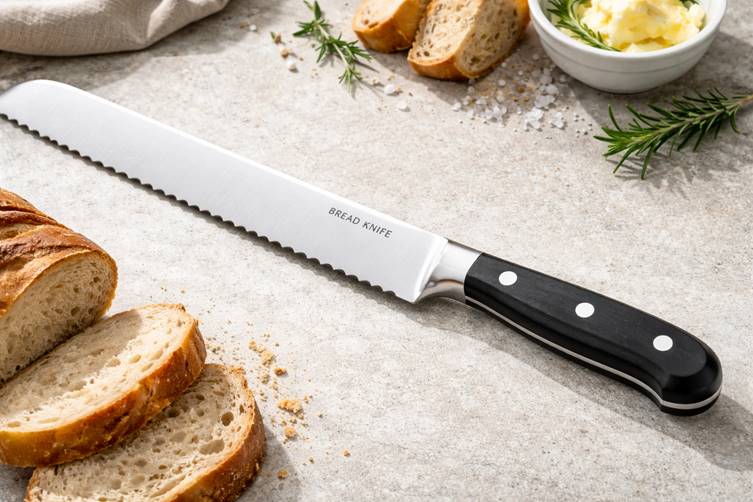
Blade Length: 8–10 inches
Blade Shape: Long with serrated edge
Best For: Foods with hard crusts and soft interiors
The bread knife’s long, serrated blade slices through hard crusts without squashing the soft inside. Unlike most kitchen knives, which rely on downward pressure, the bread knife uses a gentle sawing motion to maintain the shape and texture of delicate foods. This makes it one of the most specialized and indispensable knives in both home and professional kitchens.
Key Uses:
- Slicing loaves of bread, baguettes, and artisan bread cleanly without tearing
- Cutting cakes, pastries, and soft desserts without flattening them
- Slicing ripe tomatoes, citrus fruits, and other soft-skinned produce
- Cutting sandwiches evenly, including multi-layered or soft fillings
- Carving delicate foods like meringues or focaccia that crumble easily.
Why It’s Essential:
A bread knife ensures precision when cutting foods that would otherwise be crushed or misshapen. Among types of Kitchen Knives, it is the go-to tool for baking enthusiasts and anyone who enjoys fresh bread or delicate produce. Its serrated edge allows consistent slices every time, saving effort and reducing waste. For households that frequently serve bread, cakes, or tomatoes, the bread knife is truly irreplaceable.
4. Santoku Knife
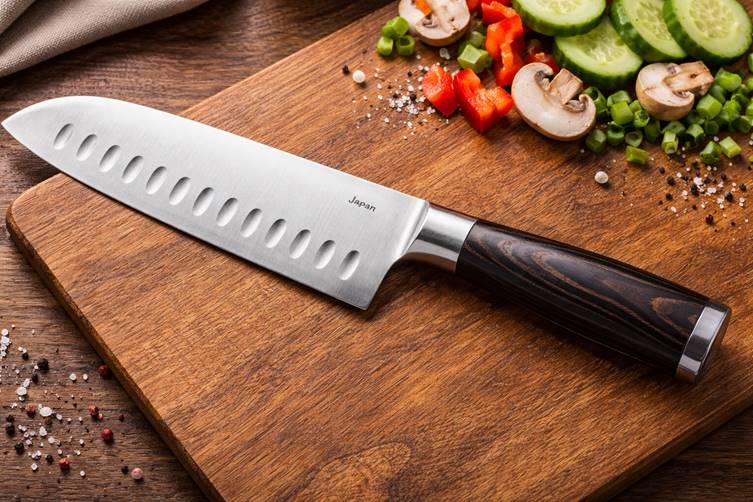
Blade Length: 5–7 inches
Blade Shape: Flat edge with rounded tip
Best For: Precision chopping and slicing
The Santoku knife is a versatile Japanese knife that serves as an excellent alternative to the traditional chef’s knife. Among modern types of Kitchen Knives, it is especially popular for its lightweight design, shorter blade, and straight cutting edge, which make it ideal for precise, controlled chopping. Its name, “Santoku,” translates to “three virtues,” referring to its efficiency in handling meat, fish, and vegetables.
Key Uses:
- Chopping vegetables using an efficient up-and-down motion
- Slicing boneless meat with smooth, even cuts
- Preparing fish fillets or sashimi with clean precision
- Fine slicing for stir-fries, salads, and garnishes
- Dicing herbs or aromatics evenly without bruising
- Producing uniform cuts for consistent cooking results.
Why It’s Essential:
The Santoku knife’s flat edge stays in full contact with the cutting board, making it easy to cut thin, even slices. Unlike a curved chef’s knife, it is better suited for straight, precise cuts. Its lightweight design reduces hand fatigue during long prep sessions, making it one of the most comfortable types of Kitchen Knives for repetitive tasks. For home cooks who value precision and efficiency, the Santoku knife is a practical, all-purpose choice that combines Japanese craftsmanship with everyday usability.
5. Utility Knife
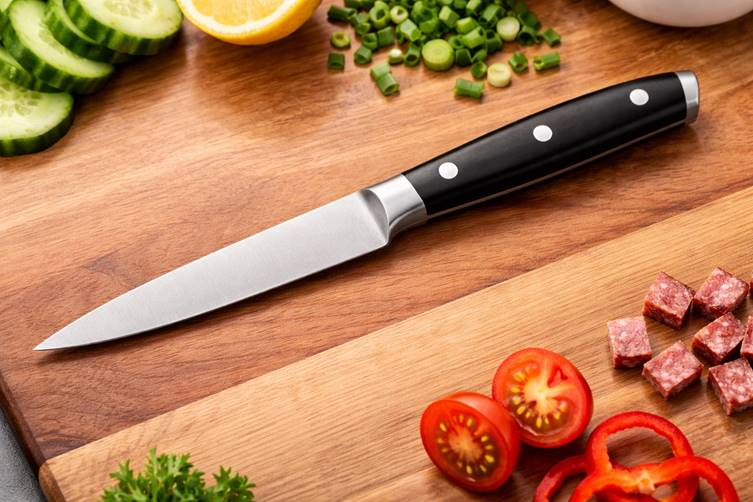
Blade Length: 4–7 inches
Blade Shape: Slim and straight
Best For: Medium-sized cutting tasks
The utility knife is a versatile mid-sized knife that bridges the gap between a paring knife and a chef’s knife. Among the most practical types of Kitchen Knives, it is perfect for everyday kitchen tasks that require more control than a chef’s knife but more reach than a paring knife. Its slim, straight blade provides precision while allowing slightly heavier cuts than a paring knife.
Key Uses:
- Cutting cheeses of various textures, from soft brie to hard cheddar
- Slicing sandwiches, rolls, and bagels evenly
- Trimming fat or excess tissue from meat or poultry
- Cutting small vegetables like cucumbers, bell peppers, or zucchini
- Segmenting fruits such as apples, pears, or peaches
- Performing detailed prep work when a chef’s knife feels too large.
Why It’s Essential:
The utility knife is highly versatile and easy to maneuver, making it ideal for mid-sized kitchen tasks. It fills a useful gap between a paring knife and a chef’s knife, handling tasks that are too big for one but too small for the other. It is lightweight yet sturdy enough for repeated use, making it a must-have for home cooks who want a reliable knife for daily chopping, slicing, and trimming. Its balance of size, control, and precision ensures that it complements any knife collection.
6. Boning Knife
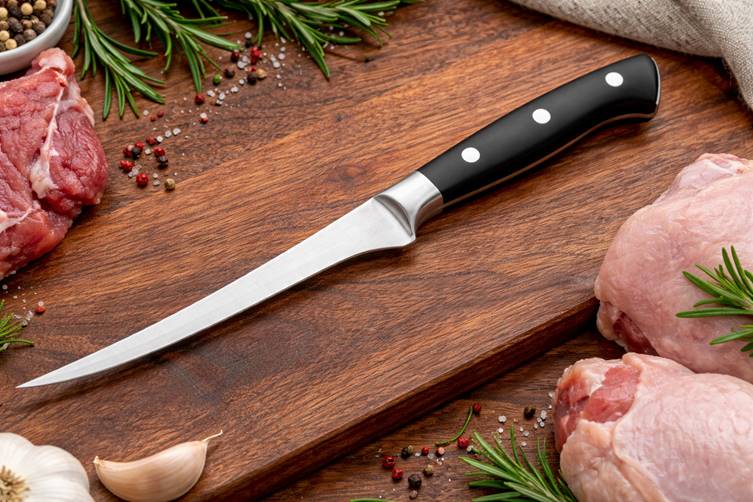
Blade Length: 5–6 inches
Blade Shape: Thin, narrow, slightly curved
Best For: Separating meat from bones
The boning knife is a tool made for precise cutting around bones and joints. It is one of the most important types of Kitchen Knives for anyone who often prepares raw meat, poultry, or fish. Its thin, narrow, and slightly curved blade allows for delicate maneuvering in tight spaces, ensuring minimal waste while maximizing yield.
Key Uses:
- Deboning chicken, beef, pork, or fish with accuracy and ease
- Removing skin from poultry or fish without tearing the meat
- Trimming excess fat, sinew, or connective tissue for cleaner cuts
- Preparing fillets, steaks, or roasts with professional precision
- Portioning meat for recipes that require specific cuts or sizes
- Making even cuts that cook well and look neat.
Why It’s Essential:
The boning knife’s flexibility and precision make it one of the most important types of Kitchen Knives for serious home cooks and professional chefs alike. Its narrow blade allows you to work close to bones, joints, and delicate flesh, reducing meat wastage and improving presentation. Whether you’re preparing a whole chicken, filleting fish, or trimming a roast, a boning knife gives you control and efficiency that a chef’s knife or utility knife cannot match. Proper use of this knife also reduces the risk of injury when working around bones.
7. Cleaver
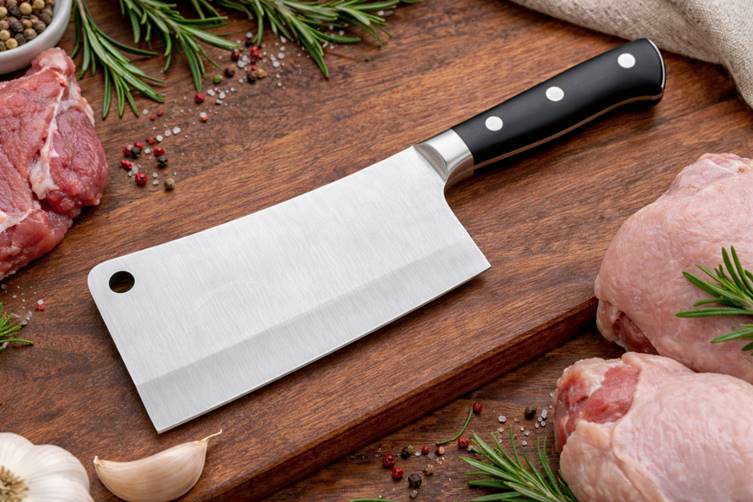
Blade Length: 6–8 inches
Blade Shape: Large, rectangular blade
Best For: Heavy-duty chopping and cutting
The cleaver is the powerhouse of all types of Kitchen Knives, designed for strength, durability, and versatility in demanding kitchen tasks. Its large, rectangular blade lets you tackle tough ingredients that other knives struggle with, making it a favorite in both professional and home kitchens, especially for Asian-style cooking. Despite its size, a well-balanced cleaver provides control and precision when handling heavy-duty chopping.
Key Uses:
- Cutting through bones and thick meat with minimal effort
- Chopping hard vegetables like squash, pumpkin, or cabbage
- Crushing garlic, ginger, and spices using the flat side of the blade
- Slicing large cuts of meat evenly
- Scooping and transferring chopped ingredients directly from the cutting board to the pan
- Preparing whole poultry or large fish for cooking.
Why It’s Essential:
The cleaver’s strength and versatility make it a must-have among types of Kitchen Knives for kitchens that handle meat-heavy recipes or large, tough vegetables. Its broad blade can also double as a tool for crushing aromatics or lifting ingredients from the cutting board. For cooks who value power, efficiency, and durability, the cleaver performs unmatched tasks, completing labor-intensive jobs safely and quickly.
8. Fillet Knife
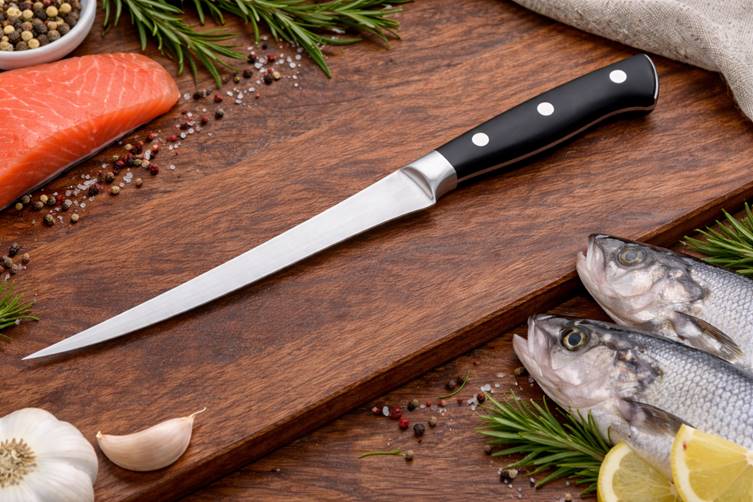
Blade Length: 6–9 inches
Blade Shape: Long, thin, flexible
Best For: Delicate fish work
The fillet knife is a highly specialized tool designed for precision and flexibility. Among the most refined types of Kitchen Knives, it excels at handling delicate tasks that require careful control and a gentle touch. Its long, narrow, and flexible blade allows it to glide effortlessly along bones and under skin, producing clean, professional-quality fillets.
Key Uses:
- Filleting fish of all sizes, from small trout to large salmon
- Removing skin from fish or poultry with minimal meat loss
- Cutting close to the bones to maximize yield and reduce waste
- Creating thin, even slices for sushi, ceviche, or presentation dishes
- Trimming fat or connective tissue from delicate proteins
- Precision portioning for plated dishes or meal prep.
Why It’s Essential:
The fillet knife is essential for preserving the texture and appearance of delicate meats, particularly fish. Among types of Kitchen Knives, its flexibility and sharpness allow you to work efficiently while reducing waste, making it invaluable for seafood lovers and professional chefs alike. Whether preparing a family dinner or a gourmet dish, the fillet knife ensures clean cuts, better presentation, and superior control.
9. Carving Knife
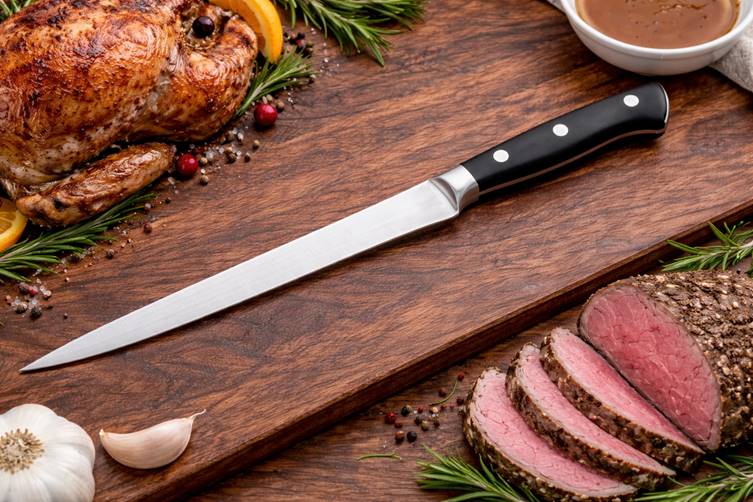
Blade Length: 8–14 inches
Blade Shape: Long, narrow, pointed tip
Best For: Slicing cooked meats
The carving knife is made for slicing cooked meats accurately. Among the essential types of Kitchen Knives, it is unique for its long, narrow blade that produces thin, uniform slices while minimizing tearing or shredding. This makes it an indispensable knife for holiday meals, dinner parties, or any occasion where presentation matters.
Key Uses:
- Carving roast chicken, turkey, or duck with clean, even slices
- Slicing beef, lamb, ham, or other large cuts of cooked meat
- Preparing thin slices for sandwiches or platters
- Serving meat directly from the oven or the carving station
- Trimming roasted meat edges for a professional finish
- Ensuring uniform portions for consistent cooking and presentation.
Why It’s Essential:
A carving knife enhances both efficiency and presentation in the kitchen. Among types of Kitchen Knives, it allows you to create professional-looking slices that cook evenly and look appealing on the plate. Its long blade reduces the need for back-and-forth sawing, ensuring smooth cuts and preserving the meat’s texture. For anyone who entertains or enjoys beautifully plated meals, the carving knife is a must-have tool that combines elegance, precision, and practicality.
10. Steak Knife
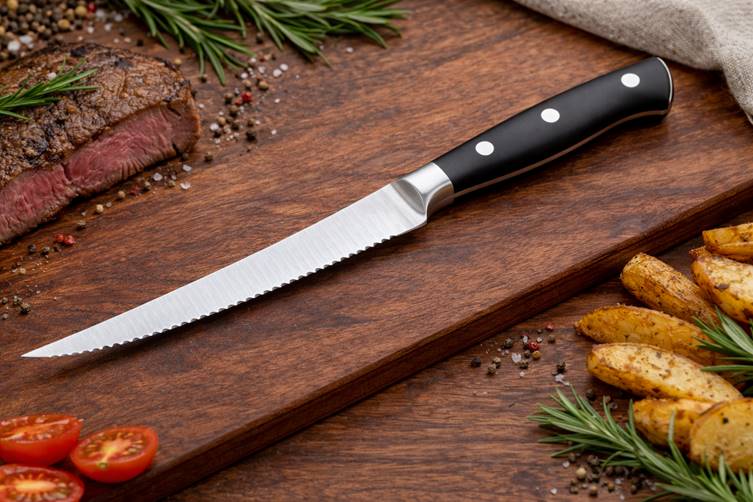
Blade Length: 4–6 inches
Blade Shape: Narrow, often serrated
Best For: Cutting cooked meat at the table
The steak knife is a specialized table knife designed to make cutting cooked meats easy and precise. Although you don’t typically use it for food preparation, every knife collection needs it, and it stands out as one of the key types of Kitchen Knives. Its narrow, often serrated blade ensures smooth slicing of meats without tearing or shredding, enhancing both dining comfort and presentation.
Key Uses:
- Cutting steak, whether rare, medium, or well-done, with minimal effort
- Slicing grilled meats like pork chops, chicken breasts, or lamb
- Cutting soft or delicate meats at the table without crushing them
- Serving at dinner parties or casual meals for personal convenience
- Slicing roasted vegetables or poultry, if needed, during dining
- Maintaining even, clean cuts for a better eating experience
Why It’s Essential:
Steak knives make eating cooked meat safer, cleaner, and more enjoyable. Among types of Kitchen Knives, they provide a practical solution for individual table use, making even tougher cuts of meat easy to handle. Their serrated edges grip the meat while preserving texture, preventing the frustration of shredded or uneven slices. For households that frequently serve steak, grilled meat, or roasted poultry, high-quality steak knives complete the knife set and enhance the dining experience.
Specialty Types of Kitchen Knives
Beyond everyday tools, there are specialized types of Kitchen Knives for specific tasks:
- Nakiri Knife: Straight-edged vegetable knife
- Cheese Knife: Prevents sticking and crumbling
- Tomato Knife: Serrated blade for soft skins
- Oyster Knife: Short and sturdy for shellfish
These knives are optional but valuable for specialized cooking.
How to Build the Right Kitchen Knife Set?
Building the perfect kitchen knife set doesn’t mean buying every knife available. Instead, focus on selecting a few essential knives first and then adding specialized tools as your cooking skills and needs grow. Starting small ensures you get the most value while learning to use each knife effectively.
Essential Starter Knives:
- Chef’s Knife: Your all-purpose workhorse for chopping, slicing, and dicing most ingredients.
- Paring Knife: Ideal for precision tasks like peeling, trimming, and garnishing.
- Bread Knife: Perfect for slicing bread, cakes, and soft produce without crushing them.
Once you’re comfortable with these core knives, you can gradually expand your set based on your cooking style:
- Santoku Knife: Great for precise chopping and slicing, especially for vegetables and fish.
- Utility Knife: Perfect for mid-sized tasks that don’t require a chef’s knife.
- Boning or Fillet Knife: Essential for meat or fish preparation if you cook proteins often.
- Cleaver: Useful for handling bones, hard vegetables, or large cuts of meat.
- Carving and Steak Knives: Ideal for special occasions, dinner parties, or family meals.
Tips for Building Your Set:
- Focus on quality over quantity: It’s better to buy a few high-quality knives than to have many low-quality ones. They last longer and perform better.
- Consider your cooking habits: If you mostly cook vegetables, a Santoku and paring knife may be more useful than a cleaver.
- Check comfort and balance: A knife should feel like an extension of your hand, balanced and comfortable for long prep sessions.
- Maintain your knives: Keep them sharp and clean to ensure safety and longevity.
By starting with essential knives and adding specialized kitchen knives as needed, you can gradually build a versatile, efficient, and personalized set that meets all your cooking needs.
Final Thoughts
Understanding the types of Kitchen Knives allows you to cook with efficiency, precision, and confidence. Each knife has a purpose, and using the right one makes cooking safer, faster, and more enjoyable. A well-chosen knife set is not a luxury; it’s an essential investment for every kitchen.