Choosing cookware isn’t just about picking something that looks good on your stove. The types of cookware materials you use can change how your food tastes, how evenly it cooks, and how enjoyable your cooking experience feels. Let’s walk through each material so you can confidently choose what works best for your kitchen.
Why Understanding Types of Cookware Materials Matters?
Cookware isn’t just about looks. The material affects:
- How evenly does food cook?
- How much oil do you need?
- How easy will the cleanup be?
- How long does the cookware last?
When you understand the types of cookware materials, you make smarter choices, avoid wasting money, and enjoy better cooking results every day.
Types of Cookware Materials
Here are some of the most popular types of cookware materials, each offering different benefits depending on your cooking style, budget, and kitchen needs.
1. Stainless Steel Cookware
What It Is
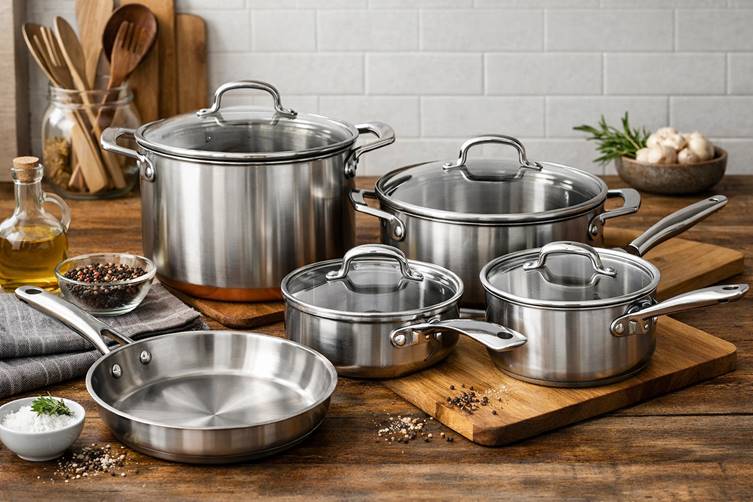
Manufacturers make stainless steel cookware by blending metals, mainly iron, chromium, and nickel. This combination makes it resistant to rust, stains, and corrosion, which is why it’s one of the most trusted types of cookware materials worldwide.
Heat Performance
On its own, stainless steel doesn’t conduct heat very well. That’s why high-quality stainless steel pans usually feature an aluminum or copper core, either layered at the base or fully clad throughout the pan. This added core helps distribute heat evenly across the cooking surface, reduces hot spots, and ensures more consistent cooking results, even at higher temperatures.
Cooking Experience
Cooking with stainless steel gives you excellent control over browning and texture. It’s ideal for building deep, rich flavors because food can stick to the surface slightly. This sticking isn’t a flaw; it creates fond, the browned bits left behind in the pan, which you can deglaze with liquid to make flavorful sauces and gravies. Once you master heat control, stainless steel becomes extremely versatile and rewarding to use.
Maintenance and Care
Stainless steel is known for being low-maintenance and long-lasting:
- Dishwasher-safe in most cases
- Doesn’t require seasoning
- Resistant to scratches, dents, and warping
- Can handle metal utensils without damage.
You can occasionally polish or soak it to remove stains and keep it shiny, but it’s easy to care for overall.
Best Uses
Shallow-frying vegetables, boiling pasta, searing meats, pan-frying proteins, simmering sauces, and everyday cooking require durability and precision.
2. Cast Iron Cookware
What It Is
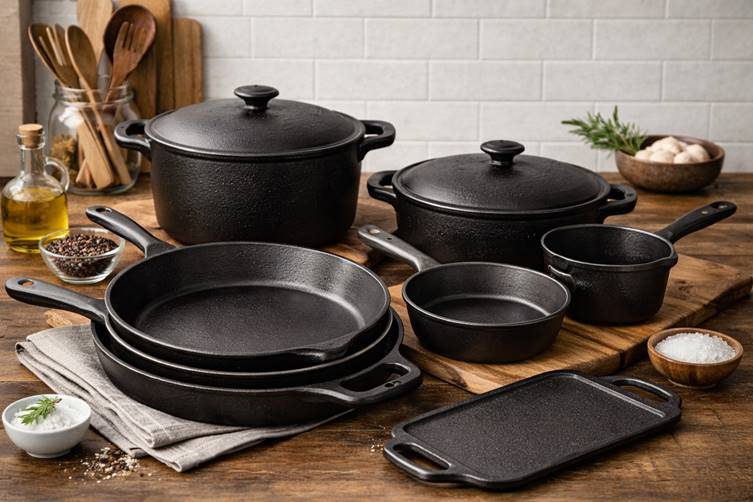
Manufacturers shape molten iron into thick, durable cast-iron pans. It’s one of the oldest types of cookware materials still widely used today, known for its rugged construction and timeless appeal. Because of its simple composition, cast iron can last for decades, and often for generations, when properly cared for.
Heat Performance
Cast iron heats up slowly compared to other cookware, but once it reaches the desired temperature, it holds heat exceptionally well. This superior heat retention allows food to cook evenly and stay hot for longer periods, making it ideal for recipes that require steady, consistent heat without frequent temperature adjustments.
Cooking Experience
With proper seasoning, cast iron develops a natural non-stick surface that improves over time. Each use adds to this seasoned layer, enhancing both performance and flavor. Cast iron excels at high-heat cooking, creating deep browning and crisp textures, which is why it’s a favorite for steaks, fried foods, and rustic dishes.
Maintenance and Care
Cast iron needs a little extra care, but it’s worth it
- Needs to be oiled regularly to stop rust
- Should be dried immediately after washing
- Don’t soak in water or use strong soaps
- Light oiling after cleaning helps maintain the surface.
With consistent care, cast iron becomes easier to use and clean over time.
Best Uses
Frying, baking bread or cornbread, slow cooking stews, roasting vegetables, searing steaks, and cooking dishes that benefit from high, even heat.
3. Non-Stick Cookware
What It Is
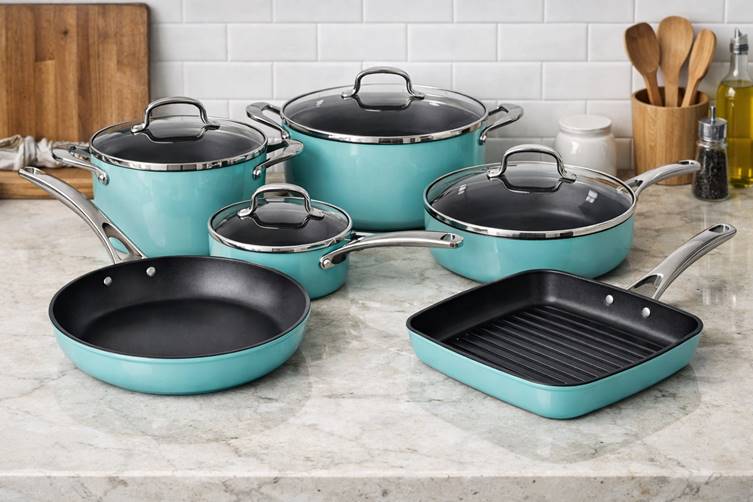
Non-stick cookware is usually made from aluminum or stainless steel and has a coating that keeps food from sticking. This coating creates a smooth cooking surface, making non-stick pans among the most beginner-friendly types of cookware. They are especially popular in modern kitchens for quick, everyday meals and hassle-free cleanup.
Heat Performance
Non-stick pans heat quickly and distribute heat evenly, which helps food cook without burning. However, they perform best at low to medium temperatures. High heat can gradually damage the non-stick coating, making it less effective. Cook with gentle, controlled heat for the best results.
Cooking Experience
Cooking with non-stick cookware feels effortless and stress-free. You can prepare meals using minimal oil or butter, making it a great option for healthier cooking. Delicate foods like eggs, fish, and crepes release easily from the pan without sticking or breaking, helping them maintain their shape and texture.
Maintenance and Care
To extend the life of non-stick cookware, proper care is essential:
- Always hand-wash to protect the coating
- Use wooden, silicone, or plastic utensils
- Avoid metal scrapers and abrasive cleaning pads
- Let the pan cool before washing to avoid warping.
With careful handling, non-stick cookware can remain effective for years.
Best Uses
Eggs, pancakes, fish, omelets, crepes, and low-fat cooking that requires easy food release and quick cleanup.
4. Aluminum Cookware
What It Is
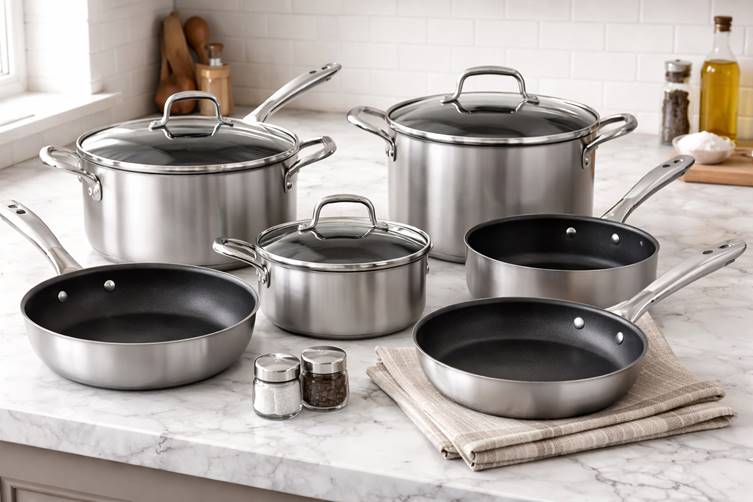
Aluminum cookware is lightweight, affordable, and widely used in both home and professional kitchens. Aluminum is popular among cookware materials because it heats quickly and is affordable. It’s commonly found in everything from simple saucepans to large commercial cooking vessels, making it a staple in everyday cooking.
Heat Performance
Aluminum heats up very quickly and distributes heat evenly across the cooking surface. This fast, consistent heating helps prevent burning and reduces the risk of uneven cooking. Because of this efficiency, aluminum cookware responds well to temperature adjustments, allowing cooks to maintain better control.
Cooking Experience
Cooking with aluminum feels quick and efficient. Since plain aluminum can react with acidic ingredients like tomatoes or vinegar, many modern aluminum pans are coated or anodized. These treatments create a protective barrier that improves safety, enhances durability, and prevents unwanted flavors from affecting the food.
Maintenance and Care
Aluminum cookware is easy to handle but requires some care:
- Lightweight and comfortable to use for long cooking sessions
- Scratches easily if not coated or anodized
- Often not dishwasher-safe, especially uncoated aluminum
- Best cleaned with mild detergent and soft sponges.
Taking care of aluminum cookware helps it last longer and stay looking good.
Best Uses
Boiling, steaming, quick, shallow frying, sauté-style cooking, and everyday meals that benefit from fast, even heating.
5. Hard-Anodized Cookware
What It Is
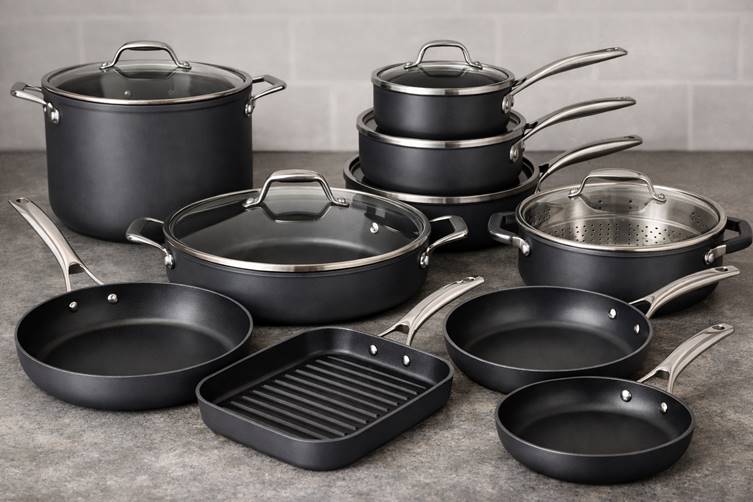
Hard-anodized cookware is aluminum that has undergone a special electrochemical process, making the surface harder, denser, and far more durable than regular aluminum. This treatment transforms aluminum into one of the most reliable types of cookware materials, offering improved strength, corrosion resistance, and a longer lifespan. Home cooks often choose it for its performance without requiring high maintenance.
Heat Performance
Hard-anodized cookware delivers fast, even heating like regular aluminum, but with added stability. The hardened surface makes it more resistant to warping, even when exposed to frequent temperature changes. This ensures consistent cooking results and better heat control over time.
Cooking Experience
Cooking with hard-anodized pans feels smooth and dependable. Many of these pans feature a non-stick surface that allows food to release easily while being more durable than traditional non-stick coatings. This makes them ideal for low-oil cooking and everyday meals without worrying about quick wear and tear.
Maintenance and Care
Hard-anodized cookware offers convenience.
- Highly scratch-resistant compared to standard aluminum
- Easy to clean with mild soap and soft sponges
- Long-lasting when used with non-metal utensils
- Some versions can go in the dishwasher, but it’s best to hand-wash them.
With proper care, these pans maintain their performance and appearance for years.
Best Uses
Daily cooking, stir-fries, pan-frying, saute-style dishes, and one-pan meals that require even heat and easy cleanup.
6. Copper Cookware
What It Is
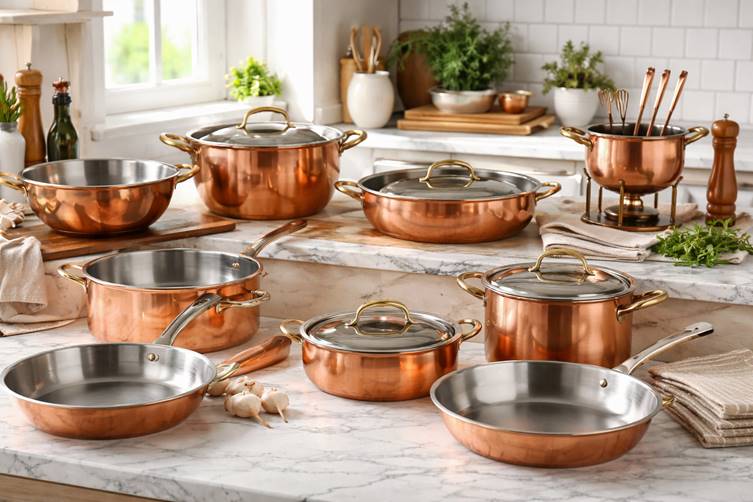
Cooks’ line copper cookware with stainless steel or tin to make it safe to cook on. This lining prevents copper from reacting with food while preserving its excellent heat conductivity. Among the various types of cookware materials, copper is considered one of the most premium options due to its performance, craftsmanship, and elegant appearance.
Heat Performance
Copper reacts almost instantly to temperature changes, heating up and cooling down faster than most other cookware materials. This rapid responsiveness gives you exceptional control over cooking temperatures, allowing you to fine-tune heat levels with precision and avoid overcooking or scorching food.
Cooking Experience
Cooking with copper cookware feels highly controlled and professional. It’s ideal when precision matters, such as when preparing sauces or delicate recipes. Small changes in heat quickly affect the food, making it easier to get consistent textures and flavors.
Maintenance and Care
Copper cookware requires more attention than most materials:
- Requires regular polishing to maintain its shine
- Hand wash only; dishwashers can damage the lining
- Higher cost compared to other cookware materials
- Lining may need professional re-tinning over time (for tin-lined pans).
With proper care, copper cookware can last a lifetime and remain a standout piece in your kitchen.
Best Uses
Sauces, candies, custards, delicate dishes, and precision cooking, where exact temperature control is essential.
7. Ceramic Cookware
What It Is
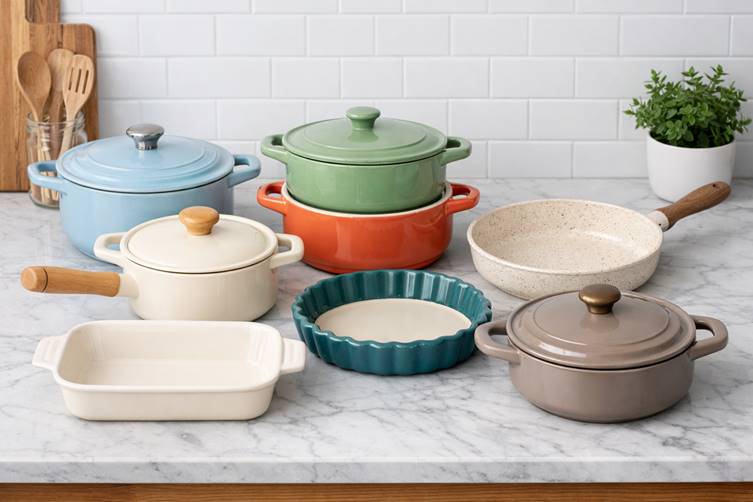
Ceramic cookware is either made entirely from ceramic material or consists of metal cookware coated with a ceramic layer. People often choose it when they prioritize healthy and chemical-free cooking. Among the various types of cookware materials, ceramic stands out for being non-toxic and free from PTFE and PFOA, making it a popular option for modern, health-conscious kitchens.
Heat Performance
Ceramic cookware distributes heat evenly across the cooking surface, helping food cook consistently without hot spots. However, it performs best at medium heat. Pouring cold water on a hot ceramic pan can crack or damage the coating and shorten its lifespan.
Cooking Experience
Cooking with ceramic cookware feels clean and effortless. It offers a smooth, naturally non-stick surface that allows food to release easily with little or no oil. This makes it great for cooking lighter meals and keeping the food’s natural flavor and texture.
Maintenance and Care
Ceramic cookware requires gentle handling to maintain its performance:
- Wash gently by hand
- Avoid high heat and sudden temperature changes
- Use wooden or silicone tools, not metal ones
- Non-toxic, eco-friendly, and safe for everyday use.
With proper care, ceramic cookware maintains its non-stick qualities and appearance for a long time.
Best Uses
Shallow frying, reheating food, low-oil cooking, light sauté-style dishes, and meals that benefit from gentle, even heat.
8. Carbon Steel Cookware
What It Is
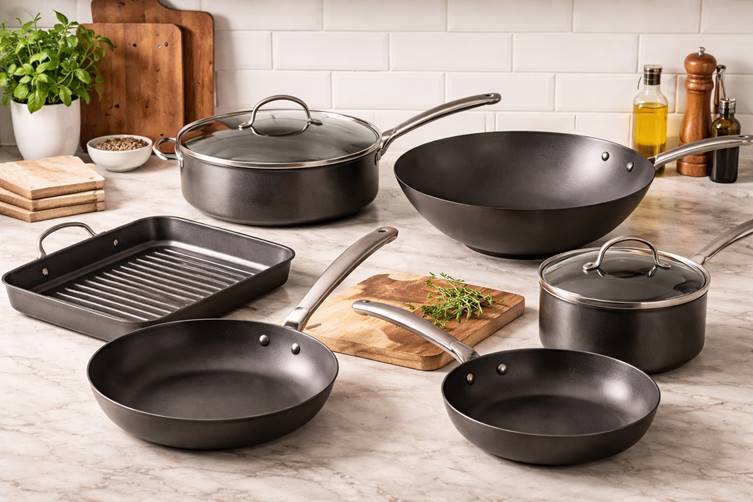
Carbon steel cookware combines iron and carbon, keeping heat like cast iron but staying lighter and easier to use like stainless steel. Among modern cookware materials, carbon steel is gaining popularity among home cooks and professional chefs alike because it offers the performance of cast iron but is easier to handle.
Heat Performance
Carbon steel heats up faster than cast iron and responds to temperature changes quickly, so you can easily control your cooking. It can handle very high heat, making it ideal for searing meats, stir-frying vegetables, and any cooking that requires intense heat. It’s fast, and even heating ensures that food cooks consistently without cold spots.
Cooking Experience
With use and seasoning, carbon steel becomes naturally non-stick and is easier to handle than cast iron. This makes carbon steel especially suitable for high-heat, fast-paced cooking techniques.
Maintenance and Care
To keep carbon steel in top condition:
- Requires seasoning with oil before first use and periodically after
- Dry it right after washing to stop rust from forming
- Avoid soaking or using harsh detergents
- Improves performance and non-stick qualities the more you use it.
With consistent care, carbon steel can last for decades and become a versatile workhorse in your kitchen.
Best Uses
Stir-frying, searing steaks or other meats, frying, high-heat sautéing, and recipes that require quick, intense heat for perfect results.
9. Glass Cookware
What It Is
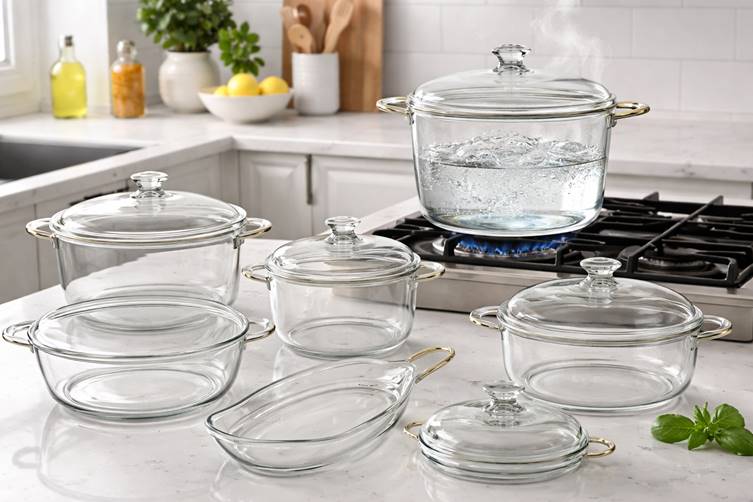
Tempered glass is used in cookware and can withstand heat in ovens and microwaves. You cannot use it on a stovetop like most metal pans. Glass stands out among cookware materials because it doesn’t react with acidic or alkaline foods. It’s a favorite for bakers, meal preppers, and anyone who values simplicity and visibility while cooking.
Heat Performance
Glass heats slowly and retains heat moderately. This makes it ideal for recipes that require gentle, even cooking, like casseroles and baked dishes. However, glass is not suitable for direct stovetop use or high-heat cooking, as sudden temperature changes can cause it to crack or shatter.
Cooking Experience
One of the biggest advantages of glass cookware is its transparency. You can watch your food cook without lifting the lid, so it cooks perfectly. Its smooth surface also makes it easy to clean and prevents food from sticking excessively, particularly when lightly greased.
Maintenance and Care
Glass cookware is very easy to maintain:
- Non-reactive and stain-resistant, so flavors are preserved
- Dishwasher-safe for convenient cleaning
- Be careful to avoid breaking or chipping it
- Don’t expose it to sudden temperature changes, like putting it straight from the freezer into the oven.
With careful handling, glass cookware can last for many years and remains an attractive addition to any kitchen.
Best Uses
Baking bread, casseroles, gratins, roasting vegetables, reheating leftovers, and food storage in the fridge or freezer.
10. Mud (Earthenware / Clay) Cookware
What It Is
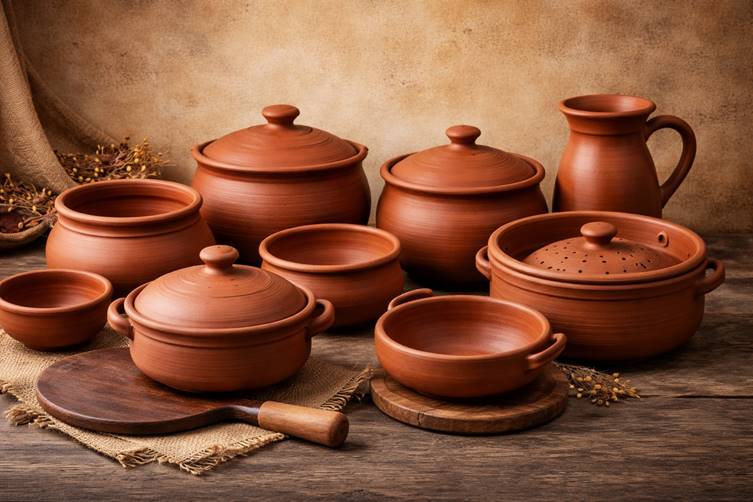
Mud cookware, also known as earthenware or clay cookware, is made from natural clay shaped and fired at high temperatures. This is one of the oldest types of cookware materials in human history and is still popular in many traditional kitchens. Because manufacturers make mud cookware from natural materials, many people value it for its simplicity, sustainability, and health-focused cooking approach.
Heat Performance
Mud cookware heats slowly and evenly. It doesn’t respond quickly to temperature changes, but once heated, it distributes heat gently across the dish. This slow cooking process helps retain moisture and prevents food from burning easily. However, sudden temperature changes can crack clay cookware, so gradual heating is essential.
Cooking Experience
Cooking in mud cookware feels calm and traditional. Food cooks slowly, allowing flavors to develop deeply and naturally. Many people believe clay pots enhance the taste and aroma of food, especially curries, dals, rice dishes, and stews. Since clay is slightly porous, it helps retain steam, keeping dishes soft and flavorful.
Maintenance and Care
Mud cookware needs careful handling:
- Must be seasoned before first use (usually soaked in water)
- Always heat gradually; never place on high heat directly
- Hand wash only; avoid soap when possible
- Fragile and can break if dropped or heated unevenly.
With proper care, mud cookware can last for years and improve cooking results over time.
Best Uses
Slow-cooked curries, rice dishes, lentils, stews, soups, traditional recipes, and low-heat cooking that benefits from moisture retention and natural flavor enhancement.
How to Choose the Right Types of Cookware Materials for Your Kitchen?
When choosing among the many types of cookware materials, ask yourself:
- What do I cook most often?
- Do I prefer low maintenance or traditional care?
- Am I cooking on gas, electric, or induction?
- What’s my budget?
Most home kitchens benefit from a mix of materials rather than a single material.
Final Thoughts
Each type of cookware material serves a specific purpose. No single option is perfect for everything, which is why most kitchens benefit from a mix of materials. When you match the cookware to your cooking habits, meals become easier, tastier, and more enjoyable.