Let me guess.
You open the cabinet under your kitchen sink very carefully, just in case something falls out.
There’s a half-empty dish soap bottle leaning to one side. Three different surface cleaners. A mystery sponge. A tangled roll of trash bags. And somehow, everything feels sticky even though it’s “clean.”
If that sounds familiar, you’re not alone. The under-sink cabinet is one of the most overlooked spaces in the kitchen and also one of the most used.
Today, we’re diving into under-sink kitchen organization in a practical, realistic, blog-style way. No unrealistic Pinterest perfection. Just smart, doable steps that actually work in real homes.
Why Under-Sink Kitchen Organization Matters More Than You Think?
This little cabinet works hard every single day.
It holds:
- Dishwashing supplies
- Surface cleaners
- Scrubbers and sponges
- Trash bags
- Gloves
- Random cleaning tools.
But unlike other cabinets, this space also has plumbing pipes, moisture risks, and awkward shapes. That’s why clutter builds up so quickly.
Proper under-sink kitchen organization doesn’t just make things look nice, it:
- Saves time during cleaning
- Prevents leaks from going unnoticed
- Reduces product duplication
- Keeps chemicals safer.
And honestly? It just feels good to open a tidy cabinet.
Step 1: Pull Everything Out (Yes, Everything)
Before you organize, you need a clean slate.
Take every single item out and lay it on the counter or floor. Group similar items together:
- Dishwashing products
- Surface sprays
- Refills
- Sponges and scrubbers
- Garbage bags.
This step alone usually reveals:
- Expired cleaners
- Empty bottles
- Duplicate purchases.
Decluttering is the foundation of effective under-sink kitchen organization.
Step 2: Deep Clean the Cabinet
Once it’s empty, take a few minutes to clean properly.
- Vacuum crumbs or debris
- Wipe down all surfaces
- Check for water damage
- Inspect pipes for slow leaks
- Dry everything completely.
If there’s any sign of moisture damage, fix it before reorganizing. There’s no point in organizing a problem area.
Step 3: Protect the Base
Under-sink cabinets are vulnerable to water.
Add:
- Waterproof shelf liner
- A rubber mat
- A plastic tray.
This small layer protects your cabinet and makes future cleaning easier. It’s a simple but powerful part of under-sink kitchen organization.
Step 4: Measure Before Buying Anything
This is where many people make mistakes.
Because of plumbing pipes, the cabinet isn’t a perfect rectangle. Measure:
- Width
- Depth
- Height
- Pipe placement.
Knowing your dimensions helps you choose storage solutions that actually fit.
Smart Under-Sink Kitchen Organization Ideas That Actually Work
Now for the fun part, organizing the space in a way that stays organized.
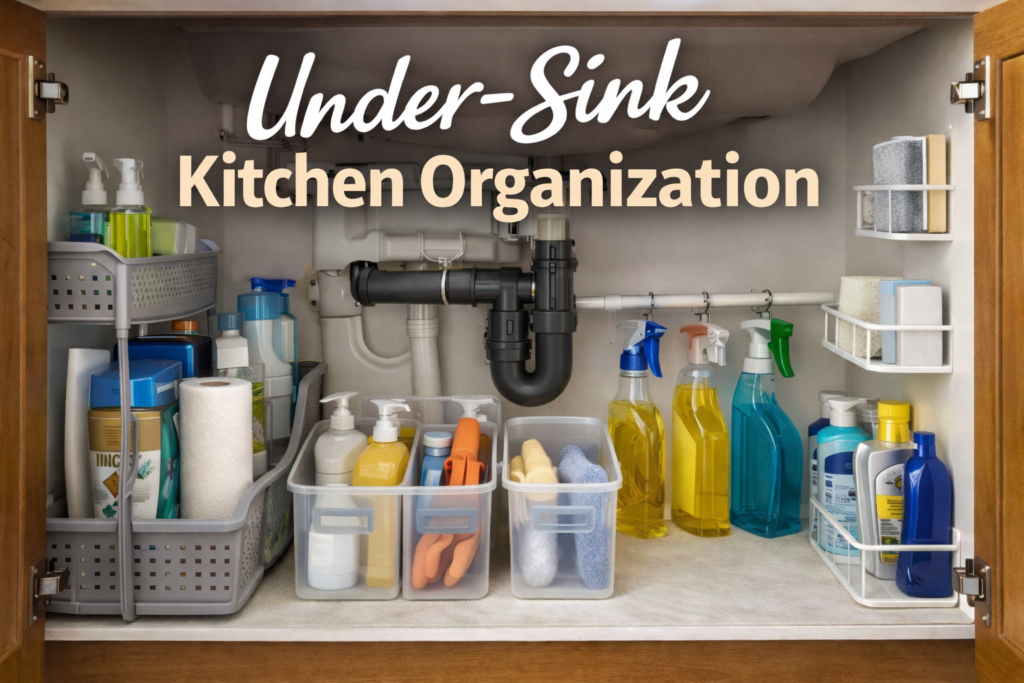
Use Clear Bins for Categories
Clear bins are a game-changer.
Create simple categories like:
- Daily cleaning
- Dishwashing
- Refills
- Trash bags.
When everything has a designated bin, clutter can’t take over. Clear containers also prevent duplicate purchases because you can see what you already have.
Add a Two-Tier Shelf Around Pipes
Vertical space is often wasted.
Two-tier organizers are perfect for:
- Storing sprays upright
- Doubling usable space
- Keeping items accessible.
They work especially well in tight cabinets and are essential for practical under-sink kitchen organization.
Install a Tension Rod for Spray Bottles
Here’s a simple hack that makes a big difference.
Install a small tension rod across the cabinet and hang spray bottles by their trigger handles.
Benefits:
- Frees up floor space
- Keeps bottles upright
- Prevents tipping.
It’s inexpensive and surprisingly effective.
Don’t Forget the Cabinet Door
The inside of the door is valuable space.
Attach:
- Small adhesive hooks
- Slim storage racks
- Narrow caddies.
Use this area for:
- Gloves
- Sponges
- Small brushes.
Smart door storage adds function without taking up floor space.
What Should You Actually Store Under the Sink?
Not everything belongs under your kitchen sink. Because of moisture, plumbing, and limited airflow, this area needs thoughtful planning as part of your Under-Sink Kitchen Organization.
| Ideal Items to Store Under the Sink | Avoid Storing Under the Sink |
| Cleaning supplies (surface sprays, disinfectants) | Food or pantry items |
| Dish soap | Paper goods (paper towels, napkins) |
| Dishwasher pods | Important documents |
| Trash bags | Small appliances |
| Cleaning cloths and scrubbers | Electronics or batteries |
Why This Matters?
- The space under the sink is prone to moisture and occasional leaks.
- Paper, food, and electronics can easily get damaged.
- Cleaning products are designed to handle moisture, making them ideal for this space.
Keeping only appropriate items here is a key part of smart under-sink kitchen organization and helps maintain both safety and functionality.
A Simple Layout That Works
Here’s a practical layout strategy for your under-sink kitchen organization:
- Back Section: Store refills and less-used items.
- Middle Section: Keep regular cleaning sprays.
- Front Section: Place daily essentials, such as dish soap.
- Door Area: Hang gloves or small tools.
This layered setup makes everything easy to access.
Safety Tips (Especially If You Have Kids or Pets)
Since this space usually holds chemicals:
- Install child safety locks
- Store hazardous products in high bins
- Keep caps tightly sealed
- Never mix cleaning chemicals.
An organization should always include safety.
How to Maintain Your Under-Sink Kitchen Organization?
Once it’s organized, maintaining it is simple.
Weekly (2 minutes):
- Wipe spills
- Return items to their designated spots.
Monthly:
- Check for leaks
- Remove empty containers.
Every 6 months:
- Reevaluate what you actually use.
A little maintenance prevents clutter from creeping back in.
Budget-Friendly Under-Sink Kitchen Organization Tips
You don’t need expensive storage systems.
Affordable options include:
- Plastic baskets
- Repurposed containers
- Shoe organizers
- Simple stackable trays.
Good organization is about structure, not price.
Final Thoughts
It may seem like a tiny cabinet, but proper under-sink kitchen organization can completely change how your kitchen feels.
When everything has a place:
- Cleaning becomes faster
- Clutter disappears
- You stop buying duplicates
- Your kitchen feels calmer.
Start small. Clear it out. Add simple bins. Create categories.
And next time you open that cabinet, you’ll see a calm, clean, organized space instead of chaos.