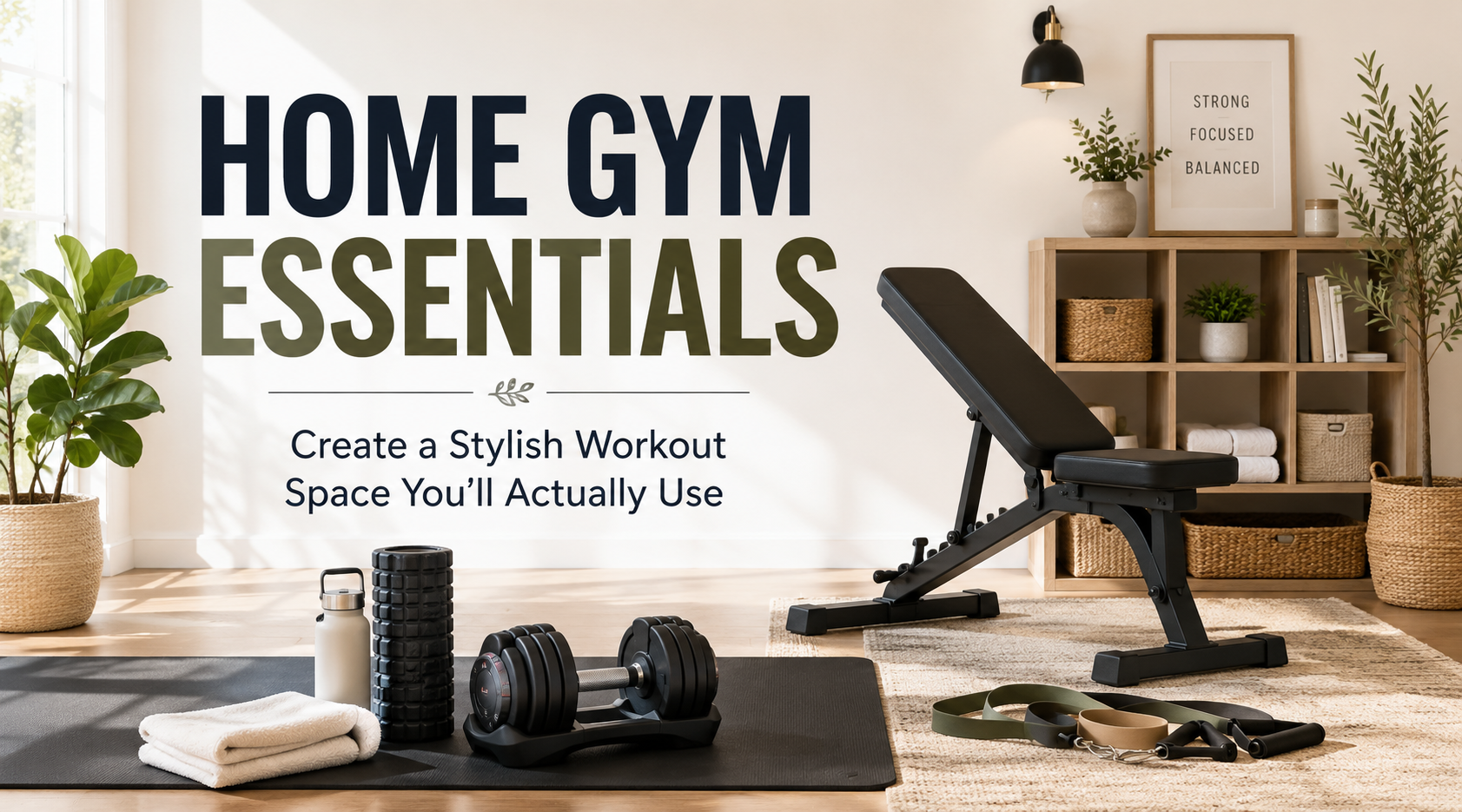
Creating a home gym sounds simple at first. You buy a few dumbbells, roll out a yoga mat, and suddenly you have a workout space, right?
Technically, yes.
But if you want a home gym that you actually enjoy using, the setup matters much more than most people expect.
A good home gym should feel comfortable, organized, motivating, and suited to the kind of workouts you genuinely enjoy. It doesn’t need to look like a commercial fitness center, nor does it need to take over an entire room.
In fact, some of the best home gyms are tucked into a spare bedroom, basement corner, garage, home office, or even a small section of the living room.
The secret is choosing the right home gym essentials instead of filling the space with equipment you may barely use.
Whether you are setting up your first workout corner or upgrading an existing fitness room, this guide covers everything worth considering from flooring and storage to strength equipment, mirrors, lighting, hydration, technology, and the little details that make working out at home much more enjoyable.
Start With the Space You Actually Have
Before shopping for equipment, take a good look at your available space.
This step may sound obvious, but it is probably the easiest one to skip.
You may love the idea of owning a treadmill, rowing machine, weight bench, and full dumbbell rack, but if your workout area is only 8 feet wide, you could quickly end up with a room that feels cramped rather than motivating.
Start by measuring:
- Floor space
- Ceiling height
- Door clearance
- Nearby electrical outlets
- Storage possibilities
- Ventilation
- Natural lighting
Then think about how you normally exercise.
Someone who enjoys yoga, Pilates, and mobility work will need a very different setup from someone focused on weight training.
If you love strength training, you may want to dedicate more space to weights, a bench, and resistance equipment.
If cardio is your priority, a treadmill, stationary bike, or compact walking pad might deserve the largest portion of your budget.
The best home gym isn’t the one with the most equipment. It’s the one designed around the workouts you are most likely to do consistently.
Top 19 Home Gym Essentials
1. Quality Exercise Flooring
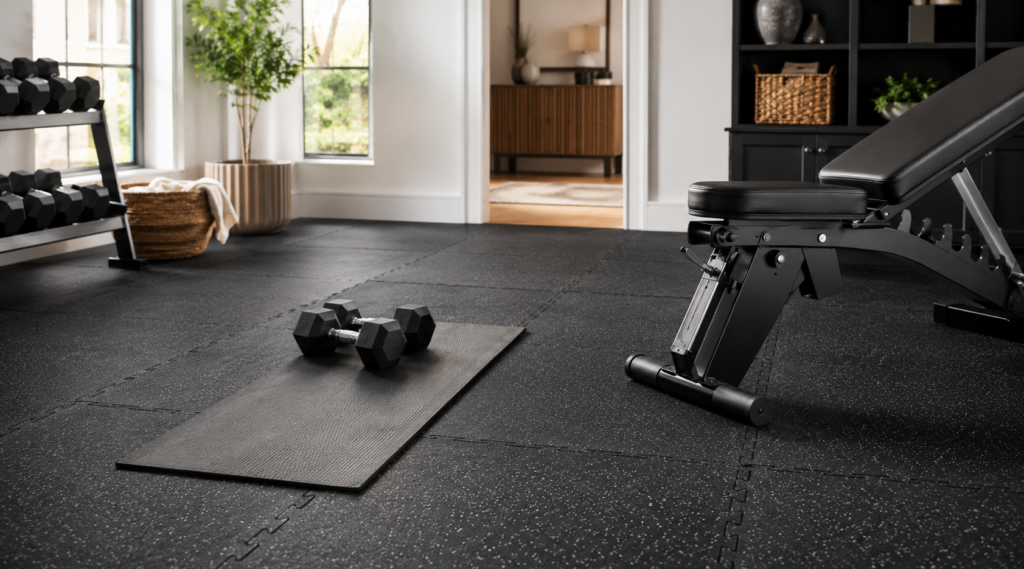
Flooring is one of those things you may not think about until you start dropping dumbbells or doing burpees on a hard floor.
A proper workout surface protects both your body and your home.
Rubber gym tiles are particularly useful in spaces where you plan to use weights because they can help absorb impact while providing better grip.
Foam tiles can work well for lower-impact activities such as stretching, yoga, Pilates, and bodyweight workouts.
You could also simply use a large exercise mat if your fitness setup is temporary or located in a shared room.
When choosing gym flooring, consider:
- Shock absorption
- Noise reduction
- Grip
- Thickness
- Moisture resistance
- Ease of cleaning
Garage gyms and upstairs workout rooms may benefit especially from thicker flooring because it can reduce vibration and noise.
Good flooring also visually defines your workout area, which can make even a small fitness corner feel more intentional.
2. Adjustable Dumbbells
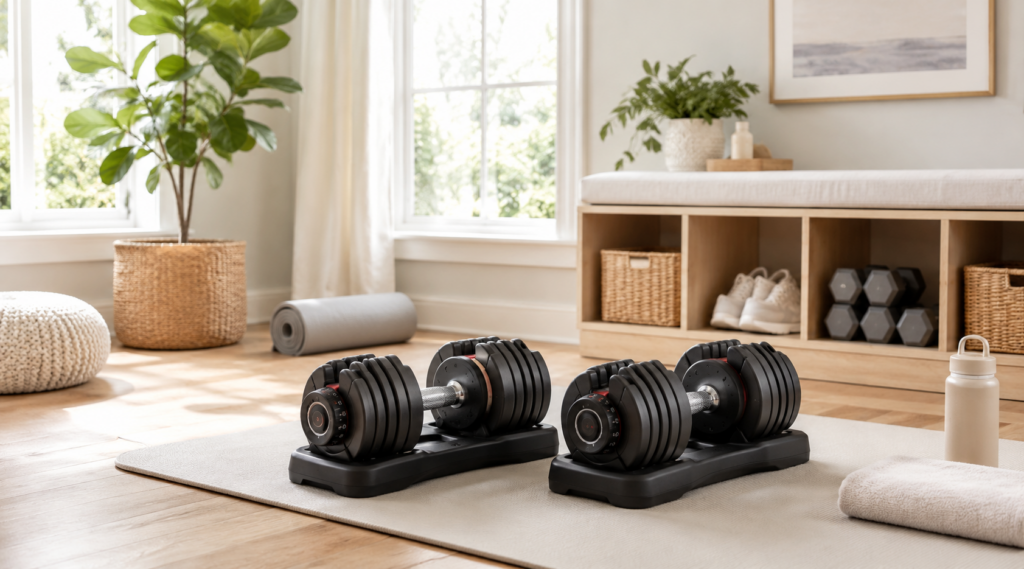
If I had to choose one piece of equipment for a small home gym, adjustable dumbbells would be near the top of the list.
Traditional dumbbells are fantastic, but they take up a surprising amount of space once you begin collecting different weights.
Adjustable dumbbells solve this problem by allowing multiple weight levels within one compact set.
They can be used for:
- Squats
- Lunges
- Shoulder presses
- Chest presses
- Rows
- Deadlifts
- Bicep curls
- Tricep exercises
They are especially useful for beginners because you can gradually increase resistance as you become stronger.
If you have a larger workout room, a complete dumbbell set with a storage rack can look fantastic and make changing weights faster.
But for apartments and smaller homes, adjustable dumbbells are usually the more practical choice.
3. Resistance Bands
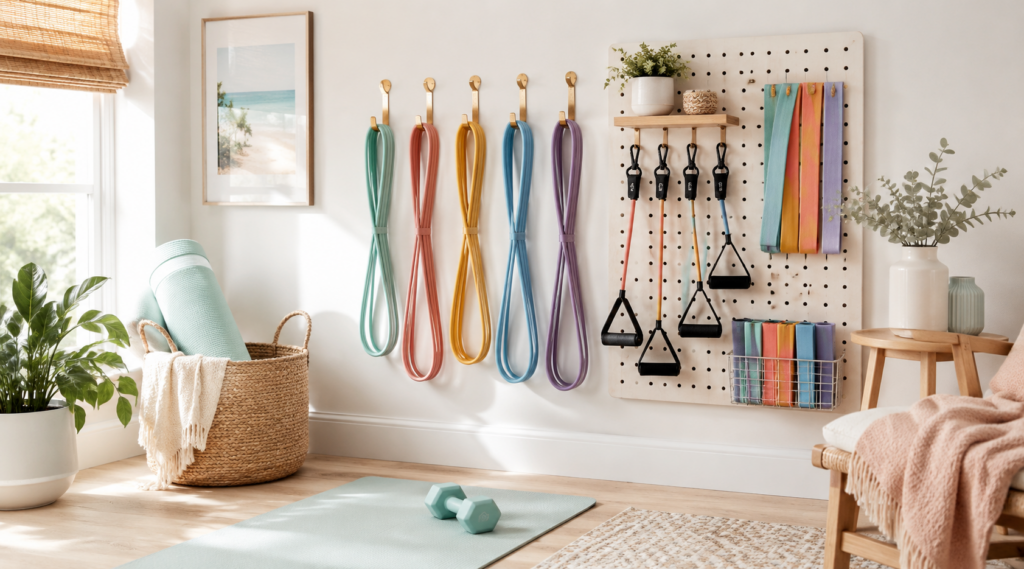
Resistance bands don’t look particularly impressive sitting on a shelf, but they are incredibly versatile.
And they are one of the most affordable home gym essentials.
A simple resistance band set can support dozens of exercises targeting your legs, shoulders, back, arms, and core.
They are particularly useful for:
- Glute activation
- Warm-ups
- Shoulder mobility
- Assisted stretching
- Strength exercises
- Rehabilitation-style movements
You can also find long resistance bands, fabric loop bands, tube bands with handles, and door-anchor systems.
Because bands take up almost no room, they are ideal for small workout spaces or home gyms that need to remain visually uncluttered.
Store them in a small basket or hang them neatly from wall hooks so they don’t turn into a tangled mess.
4. An Adjustable Workout Bench
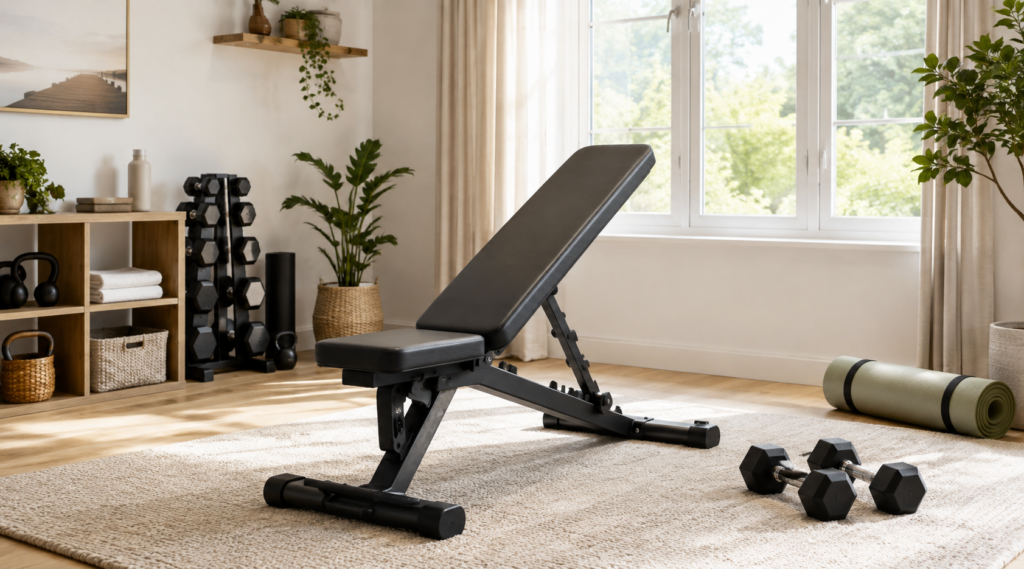
Once you start doing regular strength training, an adjustable bench becomes incredibly useful.
It gives you a stable surface for exercises such as:
- Dumbbell chest presses
- Step-ups
- Bulgarian split squats
- Seated shoulder presses
- Dumbbell rows
- Hip thrusts
An adjustable bench is even better because changing the angle allows you to perform flat, incline, and seated exercises.
If space is limited, look for a foldable bench that can be stored against a wall or underneath another piece of furniture.
For a dedicated home gym, a sturdy bench can become the centerpiece around which the rest of your strength-training setup is arranged.
5. Kettlebells
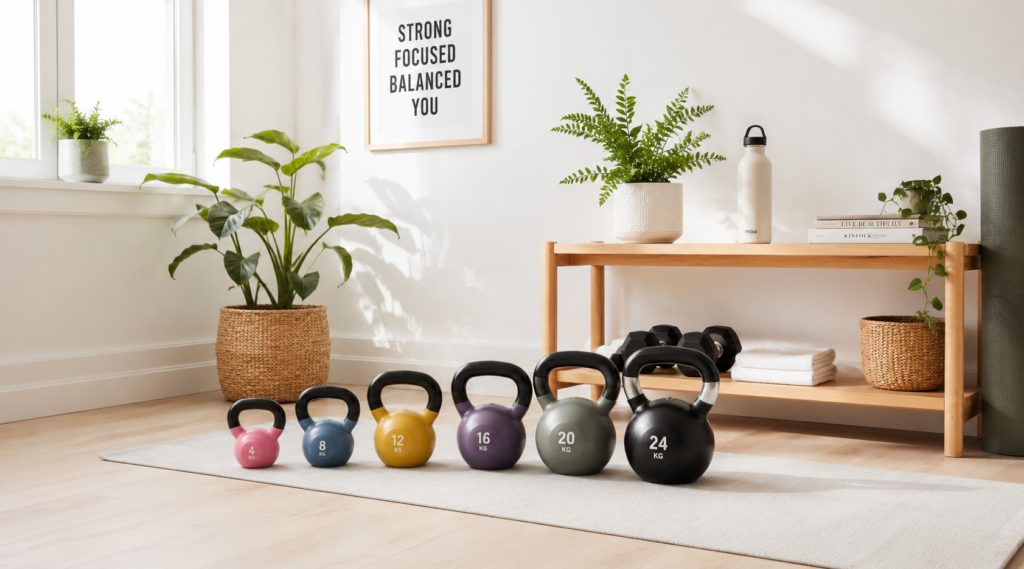
Kettlebells are another compact but incredibly effective addition to a home workout space.
They are particularly useful because they allow you to combine strength training with cardiovascular exercise.
Popular kettlebell movements include:
- Kettlebell swings
- Goblet squats
- Deadlifts
- Lunges
- Shoulder presses
- Farmer carries
If you are just starting out, you may only need one or two kettlebells.
More experienced lifters may prefer multiple weight options or an adjustable kettlebell.
Because they have such a small footprint, kettlebells also work beautifully in apartment gyms where storage space is limited.
6. A Full-Length Mirror
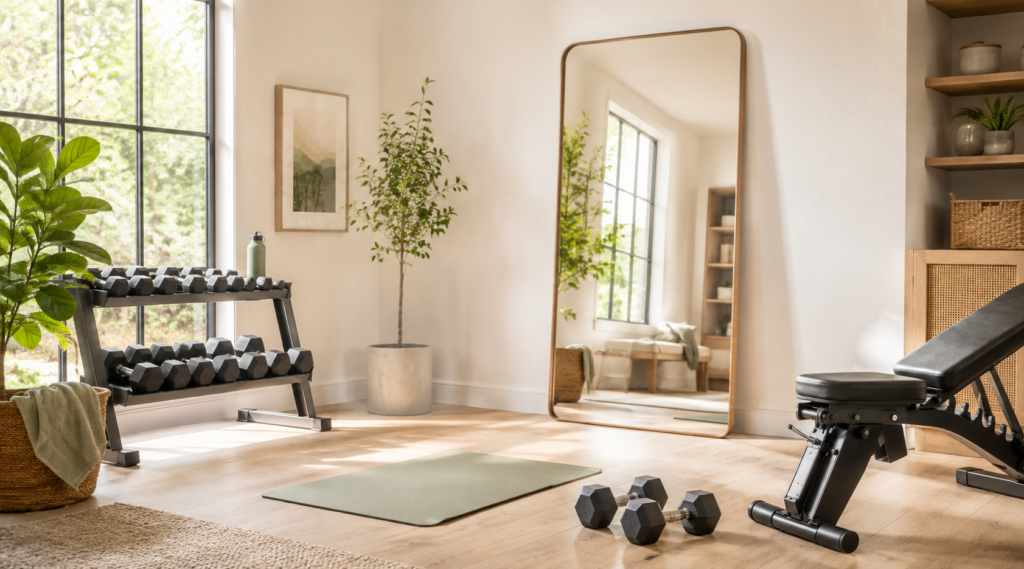
A mirror can make a surprisingly big difference in a home gym.
First, it helps you monitor your form during exercises.
But from a design perspective, mirrors also make smaller rooms feel brighter and more spacious.
A full-length mirror works especially well in home gyms used for:
- Yoga
- Pilates
- Strength training
- Dance workouts
- Mobility sessions
You don’t necessarily need an entire mirrored wall.
A large leaning mirror or securely mounted oversized mirror can provide nearly the same visual effect without making the room feel like a commercial gym.
Place it opposite a window if possible to help reflect natural light around the room.
7. Smart Storage for Home Gym Essentials
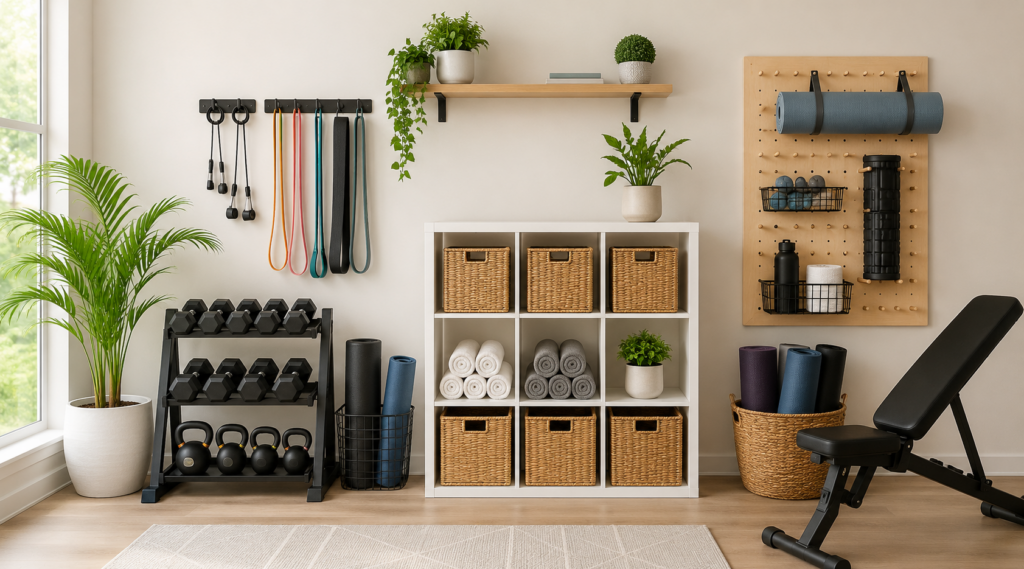
One of the fastest ways to make a home gym feel messy is to leave equipment scattered across the floor.
Even relatively small items start creating visual clutter:
- Resistance bands
- Jump ropes
- Yoga blocks
- Massage balls
- Weight plates
- Exercise mats
- Foam rollers
The solution is simple: create designated storage.
Depending on your available space, this could include:
- Wall-mounted shelves
- Storage baskets
- Rolling carts
- Dumbbell racks
- Pegboards
- Vertical mat holders
- Wall hooks
- Storage benches
Vertical storage is particularly valuable in small home gyms.
Instead of using precious floor space, use your walls whenever possible.
A simple pegboard can hold bands, jump ropes, towels, and smaller accessories while still looking organized.
8. A Foam Roller
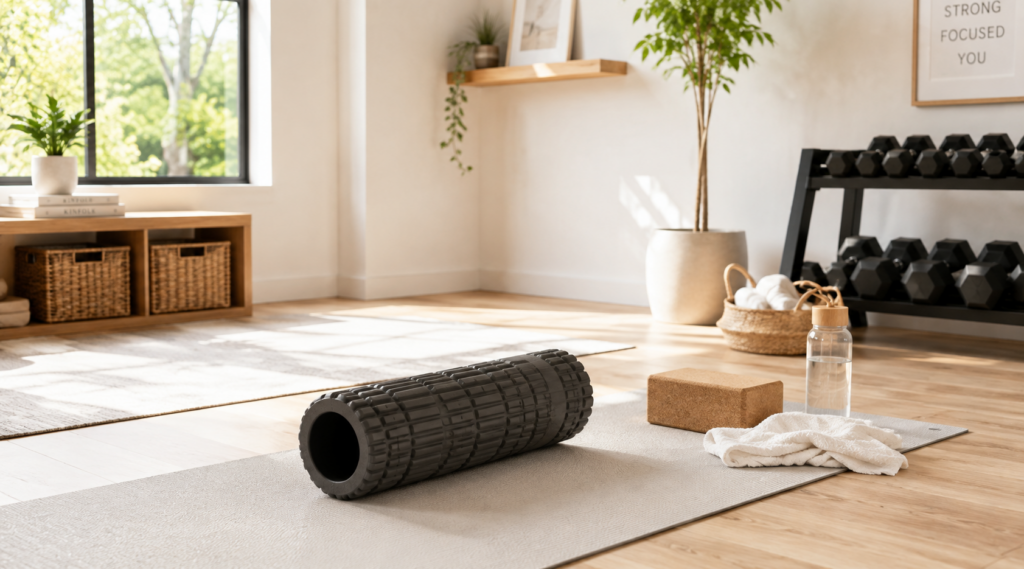
Recovery deserves a place in your home gym too.
A foam roller is one of those inexpensive pieces of equipment that can become part of your regular workout routine.
Many people use foam rollers before or after training for mobility work and muscle release.
They are commonly used on areas such as:
- Quads
- Hamstrings
- Glutes
- Calves
- Upper back
Foam rollers are also easy to store vertically in a basket or equipment corner.
If you enjoy longer mobility sessions, you may also want to keep massage balls, stretching straps, or mobility sticks nearby.
9. Yoga Blocks and Stretching Accessories
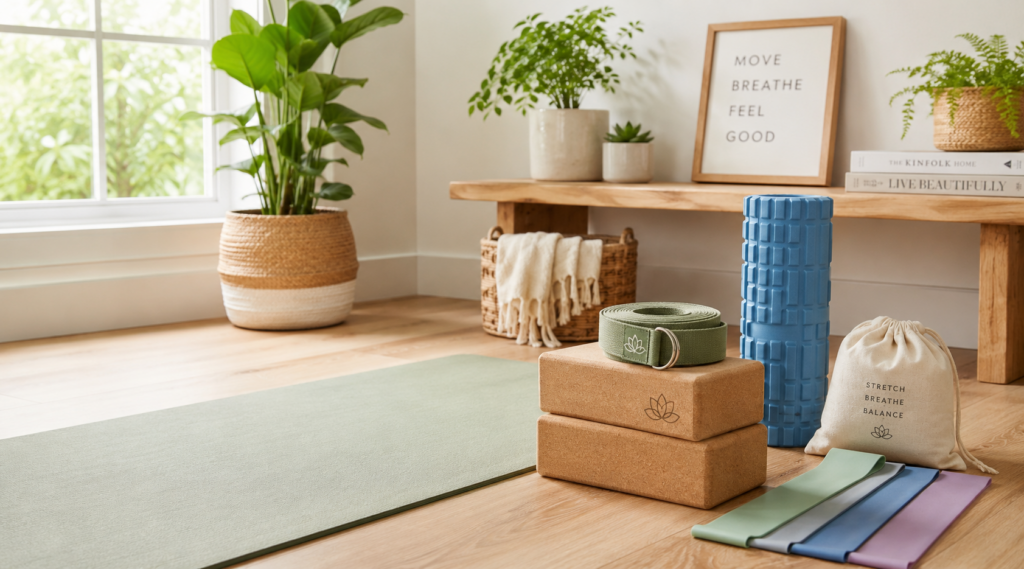
Even if you’re not someone who regularly practices yoga, yoga blocks can be useful during stretching and mobility exercises.
Blocks can help make certain movements more comfortable and provide additional support while you’re working on flexibility.
Other helpful stretching accessories include:
- Yoga straps
- Stretching bands
- Massage balls
- Balance cushions
This is also a good example of why home gyms don’t have to be filled entirely with heavy equipment.
Sometimes the simplest tools are the ones you end up reaching for most often.
10. A Cardio Machine That Matches Your Routine
A cardio machine can be a worthwhile investment, but this is one area where I wouldn’t recommend buying equipment simply because it looks impressive.
Think about what you genuinely enjoy doing.
If you love walking, a treadmill or walking pad may be perfect.
If cycling is your thing, a stationary bike might make far more sense.
Other options include:
- Rowing machines
- Ellipticals
- Stair climbers
- Compact steppers
- Under-desk treadmills
One increasingly practical option for smaller homes is the walking pad.
Many models are slim enough to slide underneath a bed, sofa, or desk when they are not being used.
That makes them particularly useful in apartments where you cannot permanently dedicate an entire room to fitness.
11. Jump Rope
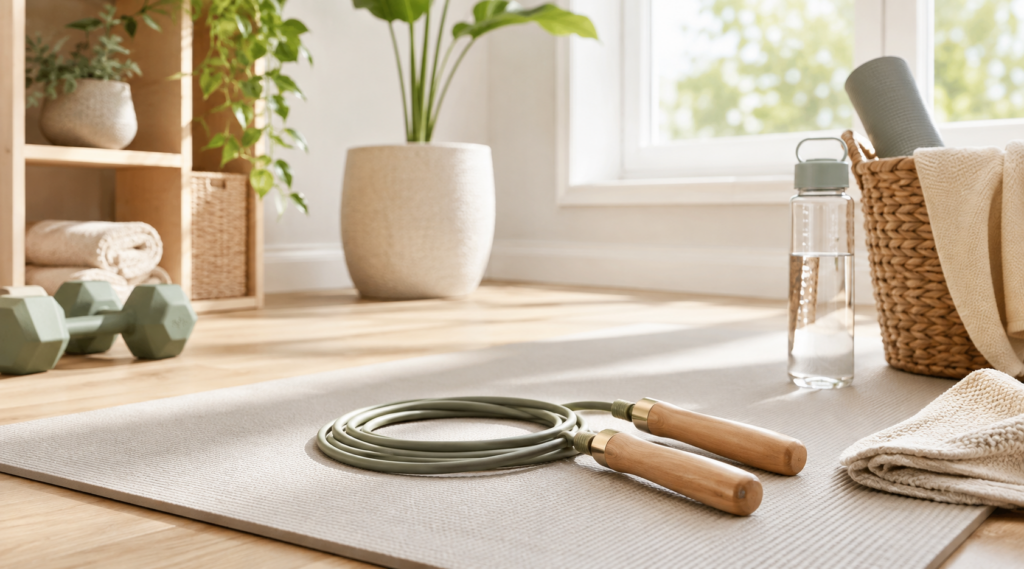
Sometimes the simplest cardio equipment is also the most effective.
A jump rope requires very little storage space and can provide a challenging workout in just a few minutes.
It is ideal for:
- Quick cardio sessions
- Warm-ups
- Interval workouts
- Coordination training
Just make sure your ceiling height and flooring are appropriate before using one indoors.
If you’re living in an upstairs apartment, you may also want to consider noise before adding jumping exercises to your routine.
Your downstairs neighbor probably doesn’t want to participate in your workout.
12. Pull-Up Bar
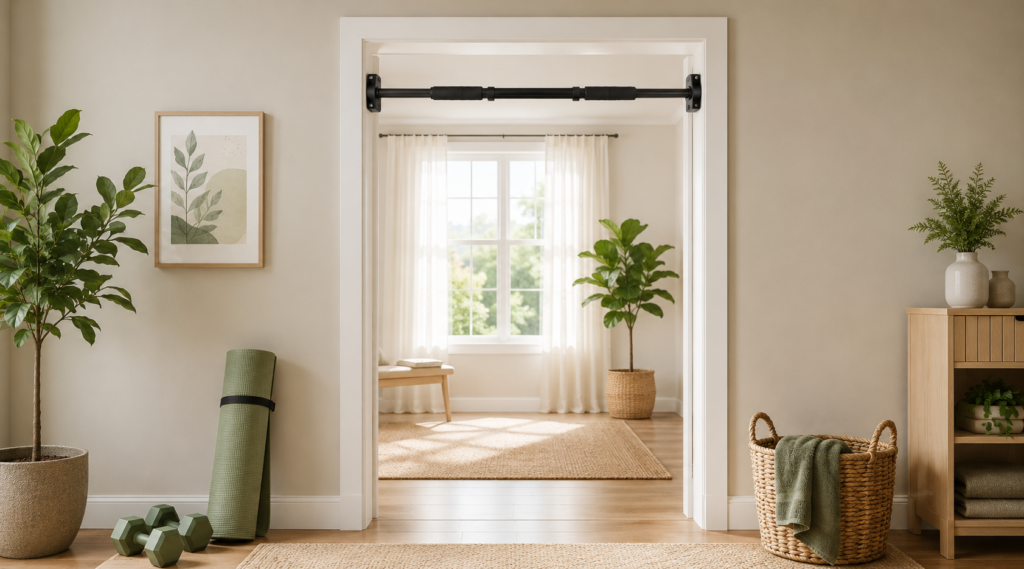
A pull-up bar can dramatically expand the number of exercises you can perform at home.
Doorway pull-up bars are especially convenient because they don’t require a large workout area.
Depending on the design, they may allow you to perform:
- Pull-ups
- Chin-ups
- Hanging knee raises
- Assisted stretches
Before installing one, always check the manufacturer’s installation requirements and make sure your doorway or mounting surface can safely support it.
If you have a dedicated workout room, wall-mounted pull-up systems or power racks may provide even greater stability.
13. Barbell and Weight Plates
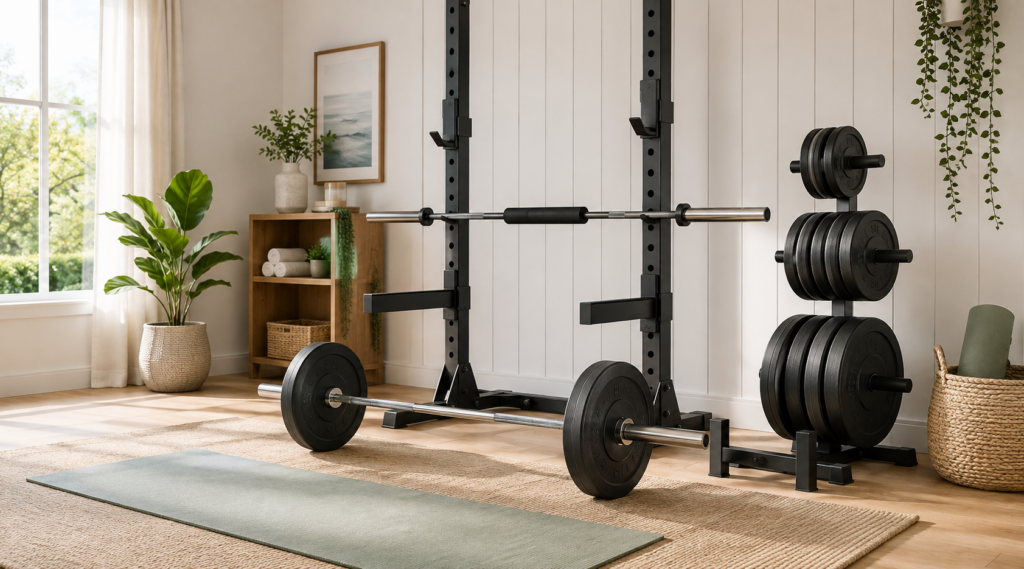
If your home gym is focused on strength training, a barbell and weight plate set can open the door to more advanced exercises.
These can include:
- Squats
- Deadlifts
- Bench presses
- Rows
- Overhead presses
Before purchasing weights, think about storage.
Weight plates leaning against a wall may work temporarily, but proper plate storage keeps the space safer and much easier to maintain.
Also consider flooring carefully if you plan to use heavier weights.
14. Ventilation and Cooling
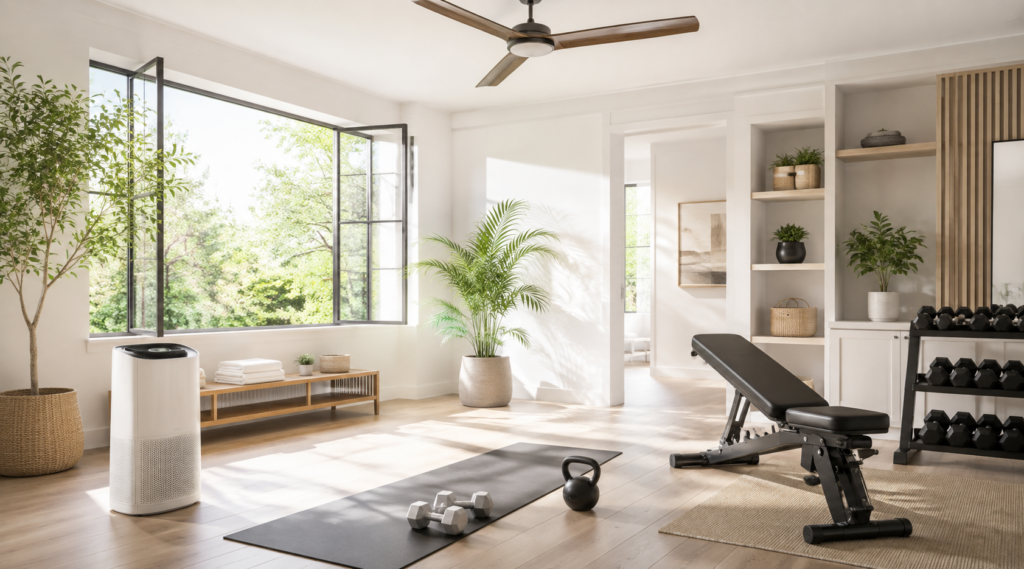
This might be one of the least glamorous home gym essentials, but it matters.
Workout rooms get warm quickly.
If you’re converting a garage, basement, spare bedroom, or attic into a home gym, think about airflow before filling the room with equipment.
Useful additions may include:
- Ceiling fans
- Portable fans
- Air purifiers
- Openable windows
- Dehumidifiers
Basements and garages can sometimes retain moisture, so controlling humidity can also help protect both the room and your workout equipment.
15. Towels
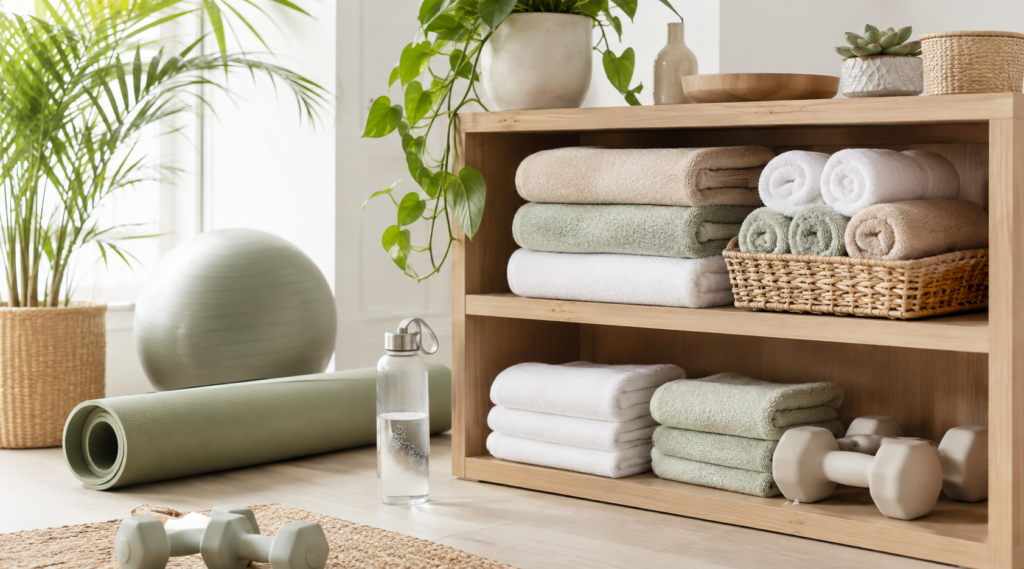
Keep a stack of workout towels somewhere easily accessible.
It sounds like a tiny detail until you’re halfway through a workout and realize your towels are upstairs in another room.
A small basket or floating shelf works well.
Choose towels that are easy to wash and dry quickly.
If your workout space has a cohesive color palette, matching towels are also an easy way to make the gym feel more polished without spending much money.
16. Bluetooth Speaker
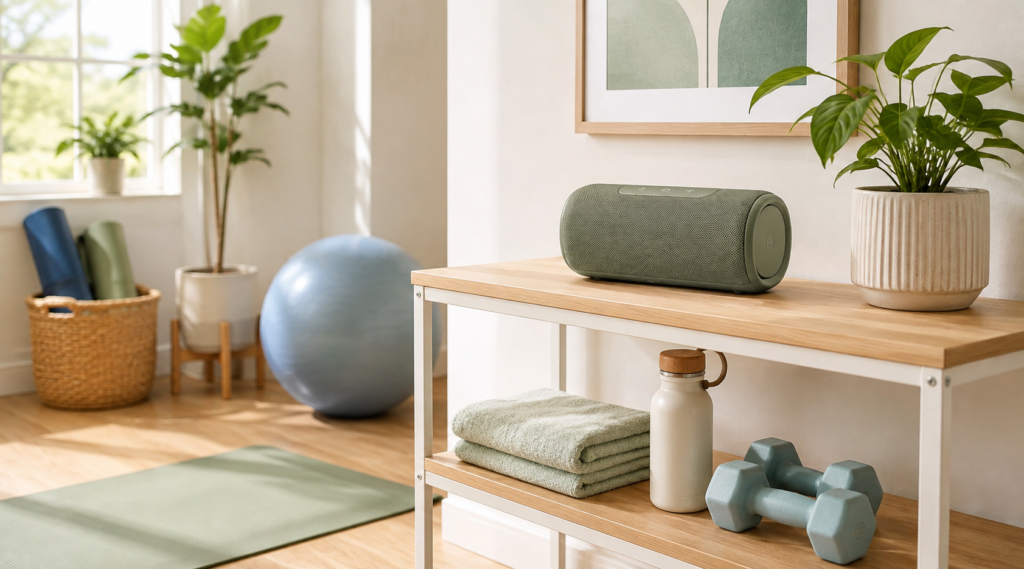
Music can completely change the energy of a workout.
A compact Bluetooth speaker lets you play:
- Workout playlists
- Podcasts
- Guided classes
- Meditation sessions
If you exercise early in the morning or share walls with neighbors, wireless headphones may be a better option.
Either way, having your preferred audio setup ready removes one more tiny obstacle between you and starting your workout.
17. Motivational Decor Without Overdoing It
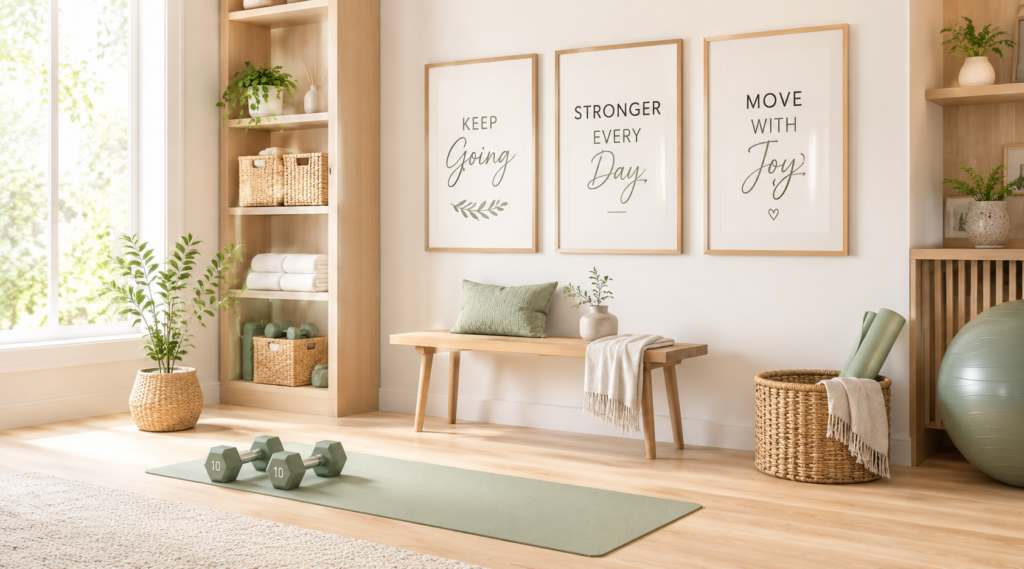
Home gyms should feel motivating, but you don’t need walls covered in aggressive fitness quotes.
Treat the room like any other part of your home.
Decorate it in a way that feels consistent with your style.
Ideas include:
- Framed typography
- Minimal artwork
- Plants
- Wood accents
- Neutral storage baskets
- Floating shelves
If you prefer a calming workout environment, stick with warm neutrals and natural textures.
If high-energy workouts are your thing, stronger contrasts and brighter accents may feel more appropriate.
Your gym should feel like a room you want to enter—not somewhere you are punishing yourself by going.
18. Plants
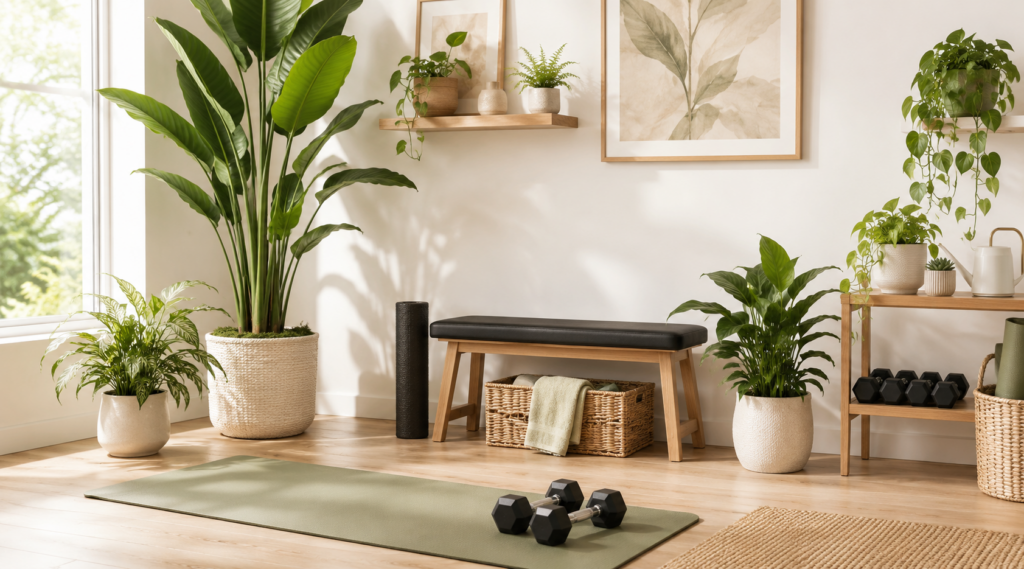
Plants are an easy way to soften the appearance of a room filled with equipment.
They can make the space feel more connected to the rest of your home rather than looking purely functional.
Low-maintenance plants are generally easiest in workout rooms.
Consider plants that tolerate your room’s actual lighting conditions instead of choosing one simply because it looks beautiful in a Pinterest photo.
A tall plant in an unused corner can also help balance bulky gym equipment visually.
19. Cleaning Supplies
Workout equipment needs regular cleaning, especially equipment handled frequently.
Keep basic cleaning supplies nearby so wiping down equipment becomes part of your routine.
You might store:
- Cleaning cloths
- Equipment-safe cleaner
- Disinfecting wipes
- Hand towels
A small basket tucked under a bench or shelf works well.
When cleaning supplies are already in the room, you’re much more likely to use them.
How to Make a Home Gym Look Stylish?
This is where home fitness starts becoming a home design project.
And yes, workout spaces can absolutely look stylish.
Start with a simple color palette.
Neutral shades such as white, beige, charcoal, warm gray, and natural wood tones tend to work well because gym equipment already introduces plenty of visual detail.
Then think about consistency.
Instead of purchasing random storage pieces over time, choose baskets, shelves, hooks, and containers that visually work together.
You can also incorporate:
- Large mirrors
- Wall paneling
- Floating shelves
- Accent lighting
- Plants
- Artwork
- Wooden details
Try to hide smaller accessories whenever possible.
Weights may look perfectly appropriate on display, but tangled bands, cables, towels, and miscellaneous accessories can make the room look cluttered quickly.
A stylish home gym doesn’t necessarily have fewer things.
It simply gives everything a proper place.
How Much Should You Spend on Home Gym Essentials?
There is no single correct budget.
You could create a functional workout space for relatively little money if you focus on basic equipment.
A simple setup might include:
Exercise mat + resistance bands + adjustable dumbbells + storage basket.
On the other hand, a complete strength-training gym with cardio machines, racks, weights, flooring, mirrors, and smart equipment can become a significant investment.
The best approach is to build gradually.
Buy the equipment that solves your current workout needs first.
Then upgrade when you know what you’ll actually use.
This also gives you the chance to invest in higher-quality pieces rather than filling the room with cheap equipment that eventually needs replacing.
Common Home Gym Mistakes to Avoid
Building a home gym is exciting, which makes it easy to overdo things in the beginning.
Here are a few mistakes worth avoiding.
- Buying Too Much Equipment: More equipment does not automatically mean better workouts. Start with versatile pieces and expand gradually.
- Ignoring Storage: Plan storage before the room becomes cluttered. You’ll thank yourself later.
- Forgetting About Flooring: Weights, jumping exercises, and cardio machines can damage flooring and create noise. Choose a surface suitable for your workout style.
- Poor Equipment Placement: Leave enough space around machines, benches, and weights to use them safely.
- Making the Room Too Dark: Good lighting has a surprisingly big impact on motivation.
- Choosing Trends Over Your Routine: The latest fitness gadget isn’t useful if you don’t enjoy using it. Build around your preferred exercises.
Final Thoughts
Creating a home gym is less about recreating your local fitness club and more about building a workout environment that fits naturally into your everyday life.
Start with a few reliable home gym essentials, such as a good exercise mat, adjustable dumbbells, resistance bands, proper flooring, and organized storage.
From there, allow your workout habits to guide future purchases.
Add a treadmill if you genuinely enjoy walking.
Invest in a squat rack if strength training becomes an important part of your routine.
Create a relaxing yoga corner if mobility and stretching are what keep you feeling your best.
And don’t forget about the design side of the room.
A little attention to lighting, storage, mirrors, flooring, and decor can transform a collection of workout equipment into a space that actually feels like part of your home.
Ultimately, the most successful home gym is one you enjoy walking into.
Because when your workout space feels comfortable, organized, and ready whenever you are, staying active at home becomes much easier.