We’ve all opened the fridge and found a forgotten container hiding in the back corner. You don’t know what it is, when you made it, or whether it’s still safe to eat. Sound familiar?
That’s exactly why organizing leftovers effectively is such an important kitchen habit. It’s not just about neatness; it’s about saving money, reducing waste, protecting your family’s health, and making everyday cooking easier.
Whether you cook daily meals, batch-cook on weekends, or often order takeout, this detailed guide will help you master organizing leftovers in a simple, sustainable way.
Why Organizing Leftovers Effectively Matters?
Many people waste a lot of food because of poor storage habits.
- Reduces food waste significantly: When you hide or fail to label leftovers, you’re likely to forget them. Organizing leftovers effectively ensures every dish gets used before it spoils. Over time, this can dramatically reduce household food waste.
- Saves money every month: Throwing away food is like throwing away cash. When leftovers are stored properly and reused creatively, grocery bills decrease naturally.
- Protects food safety: Improper storage encourages bacterial growth. Organizing leftovers effectively keeps food at safe temperatures and reduces contamination risks.
- Improves meal planning: When you can clearly see what you already have, planning the next meal becomes much easier. You avoid overbuying and duplicate cooking.
- Reduces kitchen stress: An organized fridge feels calm. You don’t have to dig through clutter or guess what’s usable.
Steps to Organizing Leftovers Effectively
Here are the steps for organizing leftovers effectively to reduce food waste, save money, and keep your fridge neat and well-managed:
Step 1: Cool Food Safely Before Storing
A critical but often ignored part of organizing leftovers effectively is proper cooling.
Why Cooling Matters?
Hot food stored incorrectly can:
- Raise fridge temperature
- Affect nearby food
- Create condensation inside containers
- Promote bacterial growth.
Best Cooling Practices
- Let food sit at room temperature for 20–30 minutes.
- Never leave food out for more than 2 hours.
- Divide large dishes into smaller portions for quicker cooling.
- Use shallow containers to speed up the process.
Quick cooling prevents spoilage and keeps food safe longer.
Step 2: Use the Right Containers
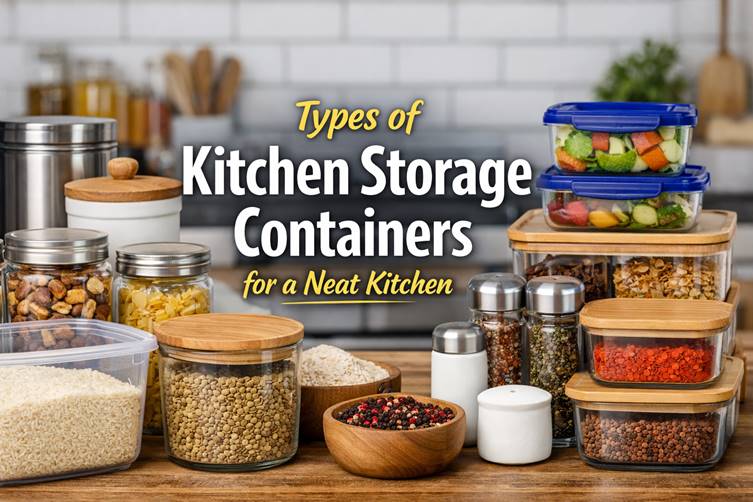
Choosing the right containers is crucial for organizing leftovers effectively.
Clear Containers Improve Visibility
If you can’t see it, you’ll forget it. Transparent containers make it easy to track what’s inside.
Airtight Sealing Prevents Contamination
Good-quality airtight containers:
- Preserve freshness
- Prevent odor mixing
- Reduce moisture buildup.
Choose Proper Sizes
Match container size to food quantity. Extra air inside large containers speeds up spoilage.
Glass vs Plastic
- Glass containers last longer and don’t absorb odors
- BPA-free plastic is lightweight and budget-friendly.
Consistency in container type also helps with stacking and organizing.
Step 3: Label and Date Everything
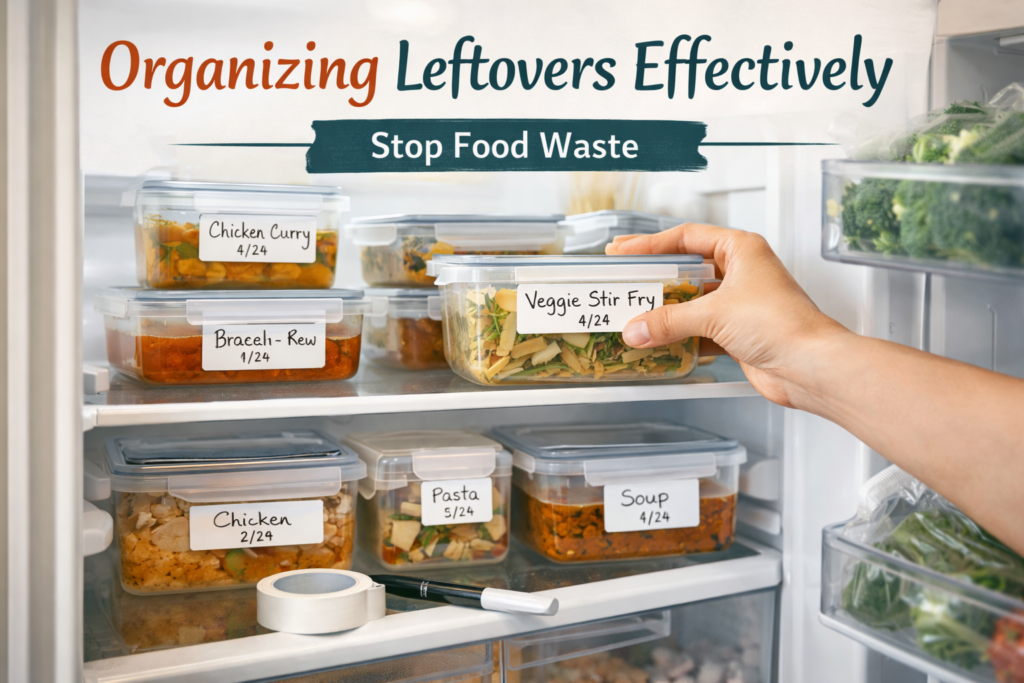
This step is essential for organizing leftovers effectively.
Why Labeling Works?
Even if you think you’ll remember, after a few days, everything looks similar.
What to Include on Labels:
- Dish name
- Storage date
- Reheat instructions (optional).
Labeling Systems
- Masking tape and marker
- Reusable magnetic labels
- Printed kitchen stickers.
This simple habit eliminates confusion and reduces waste.
Step 4: Apply the FIFO Method
FIFO (First In, First Out) is widely used in professional kitchens and is key to organizing leftovers effectively.
How to Implement FIFO at Home:
- Place newly stored food at the back
- Move older containers to the front
- Check dates before reheating.
This ensures older food gets consumed first.
Step 5: Create a Leftovers Shelf
One of the smartest strategies for organizing leftovers effectively is designating a specific fridge section.
Why This Helps?
- Keeps leftovers visible
- Prevents mixing with raw foods
- Reduces cross-contamination.
Ideal Placement
- Middle shelf at eye level
- Away from raw meats
- Easily accessible.
When leftovers have a “home,” they’re more likely to be used.
Step 6: Understand Shelf Life Guidelines
Even with perfect organization, leftovers don’t last forever.
General Storage Timeline
- Cooked vegetables: 3–4 days
- Cooked rice: 3–4 days
- Chicken dishes: 3–4 days
- Soups and stews: 3–4 days
- Pasta: 3–5 days.
Signs Food Has Spoiled
- Sour smell
- Slimy texture
- Mold spots
- Unusual color
Organizing leftovers effectively also means knowing when to discard food safely.
Step 7: Freeze Leftovers Strategically
Freezing helps food last longer and is a simple way to keep leftovers organized.
Foods That Freeze Well:
- Curries and gravies
- Lentils and beans
- Cooked meats
- Broths and soups.
Freezing Best Practices
- Use freezer-safe containers
- Leave space for expansion
- Label clearly with date
- Freeze in portion sizes.
Freezing small portions makes reheating quick and convenient.
Step 8: Transform Leftovers Creatively
Organizing leftovers effectively isn’t just about storage; it’s about smart reuse.
Creative Ideas:
- Turn leftover rice into fried rice
- Use vegetables in sandwiches or wraps
- Add grilled chicken to salads
- Blend vegetables into soups
- Make stuffed parathas with cooked fillings.
This approach keeps meals exciting and prevents food boredom.
Step 9: Maintain a Weekly Fridge Reset
Consistency makes organizing leftovers effectively sustainable.
Weekly Routine
- Check expiration dates
- Clean spills immediately
- Rearrange using FIFO
- Discard spoiled items
- Wipe shelves with mild cleaner.
A 10-minute weekly reset prevents buildup and clutter.
Step 10: Organizing Leftovers Effectively for Busy Families
In larger households, leftovers multiply quickly.
Advanced Tips
- Use uniform containers for better stacking
- Maintain a leftover inventory sheet on the fridge door
- Freeze excess portions immediately
- Plan one “leftover dinner” per week.
These systems reduce chaos and keep everything manageable.
Common Mistakes to Avoid
Even with good intentions, these habits can ruin your efforts:
- Storing hot food immediately
- Forgetting to label containers
- Overcrowding the fridge
- Using damaged or loose lids
- Ignoring expiry timelines.
Avoiding these mistakes is part of mastering the art of organizing leftovers effectively.
Final Thoughts
Organizing leftovers effectively is not about being perfect; it’s about building small, consistent habits. With proper cooling, smart containers, labeling, FIFO rotation, and creative reuse, your fridge can stay organized and efficient.
Start with one step today, labeling containers or creating a leftover shelf, and build from there.
Your kitchen will feel cleaner, your meals will be easier, and your grocery budget will thank you.